

Emergency Cooling vs Ownership: Why HVAC Hire Makes Sense for Data Centres
When cooling systems fail in a data centre, the situation escalates quickly. Unlike many commercial environments where temperature fluctuations can be tolerated for short periods, data centres operate within strict thermal limits. Even a brief loss of cooling can affect performance, trigger system shutdowns, and in extreme cases, cause permanent damage to critical infrastructure.
In these environments, the question is not simply whether to repair or replace equipment. It is whether relying solely on owned HVAC systems is the most effective approach at all. Increasingly, organisations are recognising that HVAC equipment hire offers a more flexible, controlled, and resilient solution—particularly when continuity is critical.
At Ideal Heat Solutions, we support data centres and commercial facilities across the UK with emergency and planned HVAC hire, helping maintain stable operating conditions when it matters most.
The Cooling Demands of Modern Data Centres
Data centres are designed to operate continuously, often supporting essential services, cloud infrastructure, financial systems, and communications networks. Every server, storage device, and networking component generates heat as part of its normal operation. Without consistent cooling, temperatures begin to rise almost immediately.
Most equipment is designed to operate within a relatively narrow range, typically between 25°C and 35°C. Once temperatures exceed this range, systems begin to protect themselves. Performance is reduced, workloads are throttled, and if temperatures continue to rise, shutdown becomes unavoidable.
The financial and operational consequences of this are significant. Downtime can disrupt services, breach contractual agreements, and damage client confidence. For co-location facilities or large-scale data environments, the impact can extend across multiple customers at once.
This is why cooling systems are treated as mission-critical infrastructure—and why contingency planning, including emergency chiller hire for data centres, plays such an important role.
Why HVAC Hire Is a Smarter Alternative to Ownership
Owning HVAC equipment may seem like the logical approach, particularly for facilities with constant cooling demand. However, ownership introduces a range of challenges that are often underestimated.
The initial investment alone can be substantial. Chillers and associated plant represent a significant capital expense, tying up funds that could otherwise be used to support growth, infrastructure upgrades, or operational improvements. Beyond this, there are ongoing responsibilities, including maintenance, compliance, monitoring, and eventual replacement.
Even with a well-maintained system, failure is always a possibility. Mechanical components wear over time, control systems can fail, and external factors such as power fluctuations or extreme weather can introduce additional risk. When failure does occur, the time required to repair or replace equipment can be longer than the environment can tolerate.
HVAC hire offers a different approach. Instead of relying entirely on owned assets, businesses can access modern, high-performance equipment when needed, without the long-term commitment. This provides greater flexibility, reduces financial exposure, and ensures that support is available when systems are under pressure.
Responding to a Chiller Failure
When a chiller fails in a data centre, every minute counts. The priority is to stabilise temperatures and restore cooling before systems begin to shut down.
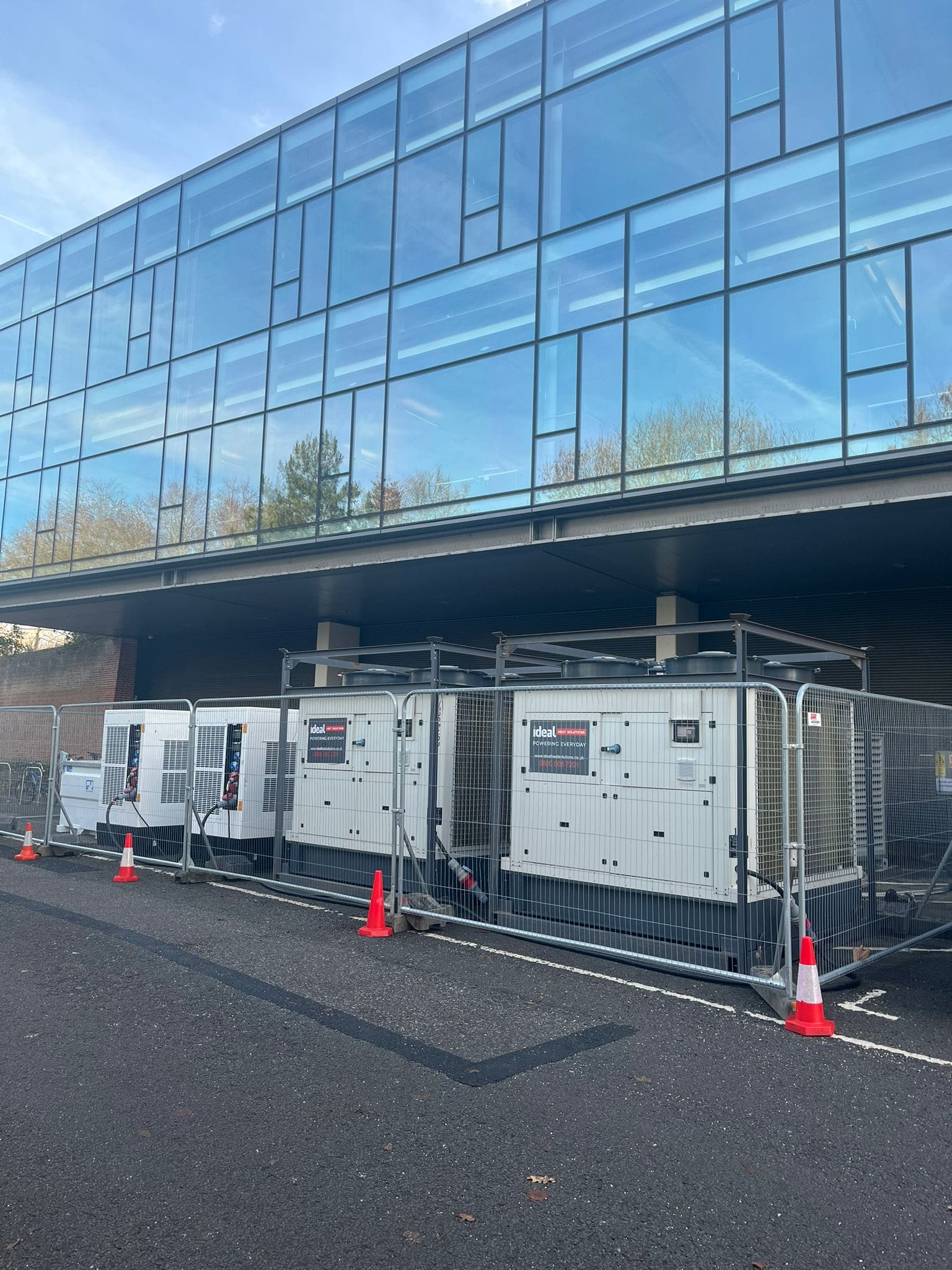
Emergency chiller hire allows organisations to bypass failed equipment and reintroduce cooling into the system without waiting for repairs to be completed. Temporary chillers are positioned externally and connected into the existing infrastructure, supplying chilled water back to the building’s air handling systems.
At Ideal Heat Solutions, we provide cooling-only chillers ranging from 400kW to 850kW for larger data centre environments, alongside smaller units for more contained applications. We also offer heat pump chillers from 50kW to 200kW, providing flexible cooling solutions for smaller or more targeted deployments where space, access or load requirements differ.
Each system is supported by remote monitoring through Trane Connect, allowing performance to be tracked and adjusted as required.
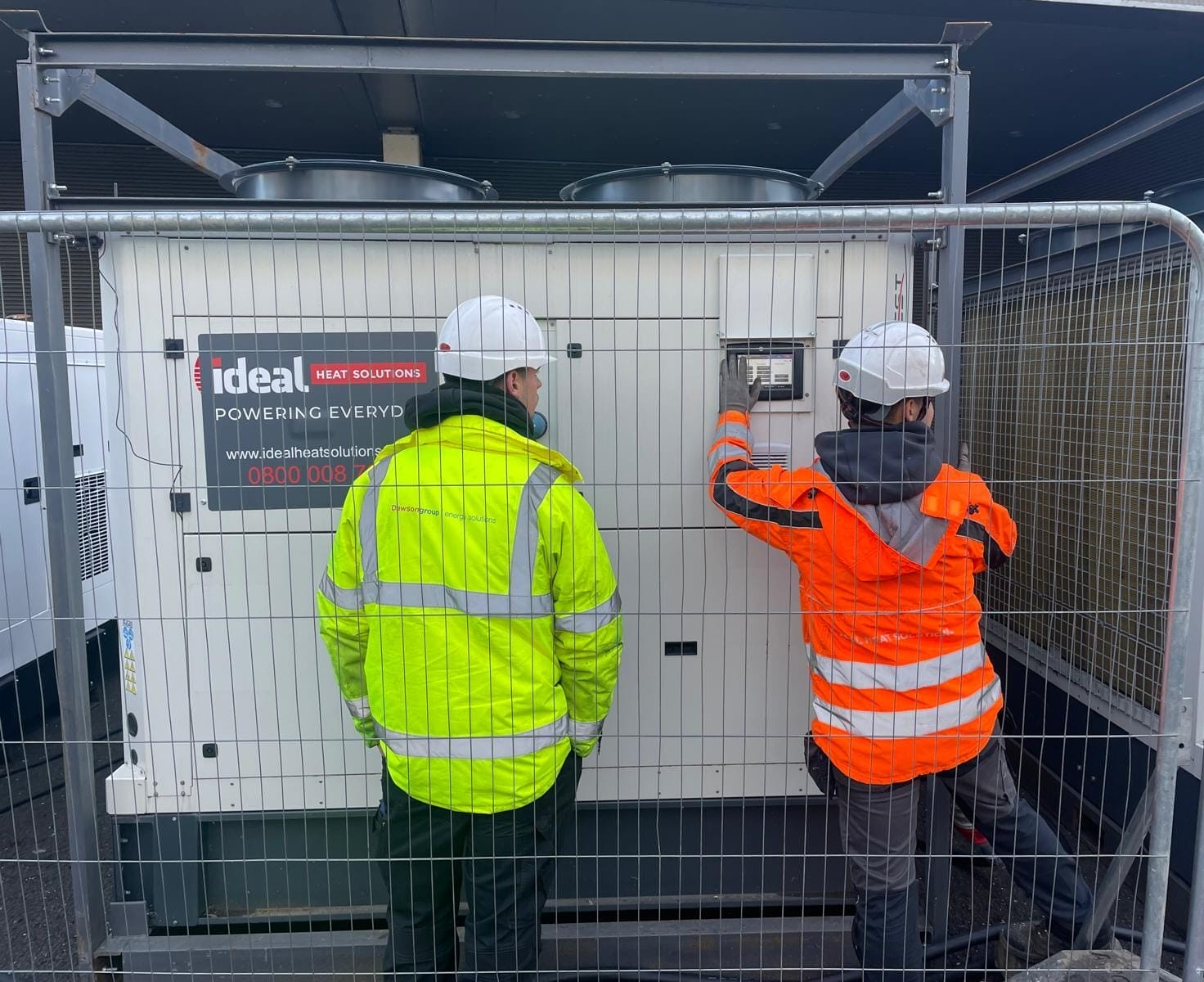
Our engineers manage the connection, commissioning, and integration process, ensuring that the temporary system operates safely and effectively alongside existing infrastructure.
Operational Flexibility and Control
One of the key advantages of HVAC hire is the ability to adapt quickly to changing requirements. Data centre loads are not static. As infrastructure expands, contracts evolve, or seasonal demand shifts, cooling requirements can change.
Hiring allows organisations to adjust capacity as needed. Additional units can be introduced, systems can be reconfigured, and equipment can be scaled without the need for permanent investment. This level of flexibility is particularly valuable in environments where future demand is uncertain or likely to grow.
It also provides a level of control that ownership cannot always deliver. Instead of committing to a fixed capacity, businesses can align their cooling provision with actual demand, improving efficiency and reducing unnecessary cost.
Financial Benefits Without Compromise
From a financial perspective, HVAC hire offers a more controlled and transparent approach. Costs are linked directly to usage, making budgeting more predictable and easier to manage. There is no requirement for large upfront expenditure, and no concern about asset depreciation over time.
Hiring also removes the hidden costs associated with ownership. Maintenance, servicing, and compliance are managed by the provider, reducing the burden on internal teams. Once the hire period ends, the equipment is removed, leaving no long-term obligations.
For many organisations, this shift from capital expenditure to operational expenditure represents a more efficient use of resources, particularly in fast-moving or high-demand sectors.
Supporting Equipment and System Integration
A successful cooling solution often involves more than just the chiller itself. Depending on the existing infrastructure, additional components such as pumps, buffer tanks, and flexible connections may be required to ensure stable operation.
Rather than sourcing these elements individually, working with a specialist HVAC hire provider ensures that the entire system is designed and delivered as a complete solution. This reduces complexity and ensures that all components work together effectively.
At Ideal Heat Solutions, we supply a full range of ancillaries alongside our hire equipment, allowing us to deliver integrated systems tailored to the specific needs of each site.
Compliance and Reliability
Data centres operate under strict regulatory and operational standards. HVAC systems must be safe, compliant, and reliable at all times. Hiring from a specialist provider helps ensure that these requirements are met, with equipment that is maintained, tested, and installed in line with industry best practice.
Our systems are designed to operate in demanding environments, with a focus on reliability, efficiency, and ease of integration. Combined with experienced engineering support, this ensures that temporary solutions perform to the same standard as permanent installations.
Planning Ahead: The Importance of Contingency
While emergency response is critical, the most effective strategy is to plan ahead. Having a contingency plan in place ensures that, in the event of a failure, the response is immediate and coordinated.
A typical contingency plan includes pre-identified connection points, an understanding of site requirements, and access to appropriate equipment. This allows temporary systems to be deployed quickly and with minimal disruption.
Ideal Heat Solutions works closely with data centre operators to develop tailored contingency plans, helping reduce risk and improve resilience.
Conclusion
In data centre environments, cooling is not optional. It is fundamental to performance, reliability, and business continuity. While owning HVAC equipment may seem like a secure solution, it often introduces unnecessary cost and complexity.
HVAC hire provides a more flexible and resilient alternative. It allows organisations to respond effectively to failures, adapt to changing demands, and maintain control over both operational performance and financial planning.
Emergency chiller hire, in particular, plays a critical role in protecting infrastructure when systems fail. With the right support in place, what could become a major disruption can be managed efficiently and with confidence.
Call our team today or complete our quick online form for a free, no-obligation quote on emergency chiller hire for data centres and critical environments.
Frequently Asked Questions
How quickly can emergency chiller hire be deployed to a data centre?
In most cases, emergency chiller hire can be delivered and made operational within hours, depending on site access, capacity requirements, and connection points. Having a contingency plan in place can significantly reduce response time.
What size chiller is needed for a data centre?
The required chiller size depends on the total heat load generated by the IT infrastructure. Data centres typically require high-capacity systems, often ranging from 400kW to 850kW or more for larger facilities. A site assessment helps determine the correct specification.
Can a temporary chiller integrate with existing data centre systems?
Yes. Temporary chillers are designed to integrate with existing chilled water systems, supplying cooling directly to CRAH or CRAC units. This allows cooling to be restored without waiting for permanent plant repairs.
What happens if a data centre loses cooling?
Without cooling, temperatures rise quickly, leading to thermal throttling, reduced performance, and potential system shutdown. In severe cases, hardware damage can occur, resulting in costly downtime and operational disruption.
Is HVAC hire more cost-effective than buying equipment?
For many organisations, hiring HVAC equipment is more cost-effective. It avoids large upfront investment, removes maintenance and compliance responsibilities, and allows costs to be aligned with actual usage rather than long-term ownership.
Do you provide full cooling packages or just chillers?
A complete solution is typically provided, including chillers, pumps, hoses, buffer tanks, and other ancillaries required for safe and efficient operation. This ensures the system works as a fully integrated temporary solution.
Can emergency chiller hire be used for planned maintenance as well as breakdowns?
Yes. Many data centres use temporary chiller hire during planned shutdowns, upgrades, or maintenance to maintain continuous cooling and avoid disruption.
Do you offer contingency planning for data centre cooling?
Yes. Contingency planning allows equipment, connection points, and response strategies to be defined in advance, ensuring a faster and more controlled response in the event of a failure.
To learn more or book a free site survey, contact Ideal Heat Solutions today.
📞 CALL US: 0808 301 4183
QUICK FORM FILL: Contact Us – Ideal Heat Solutions
DISCOVER OUR EXTENSIVE CHILLER RANGE
Explore our latest project case studies
