

What Is Planned Chiller Hire?
Planned chiller hire is the pre-arranged rental of a temporary cooling system to maintain building or process temperatures during scheduled periods when permanent HVAC equipment is taken offline. Unlike emergency hire, which is reactive, planned chiller hire is coordinated in advance, allowing time for proper preparation, system design, and installation planning.
This approach ensures that a temporary chiller is fully installed and operational before the permanent system is shut down. As a result, there is no interruption to cooling, and building occupants or processes remain unaffected while maintenance or upgrade works take place.
For facilities where cooling is essential, such as offices, hospitals, manufacturing sites, and data centres, this continuity is critical. Planned chiller hire allows maintenance to be completed without compromising comfort, safety, or productivity.
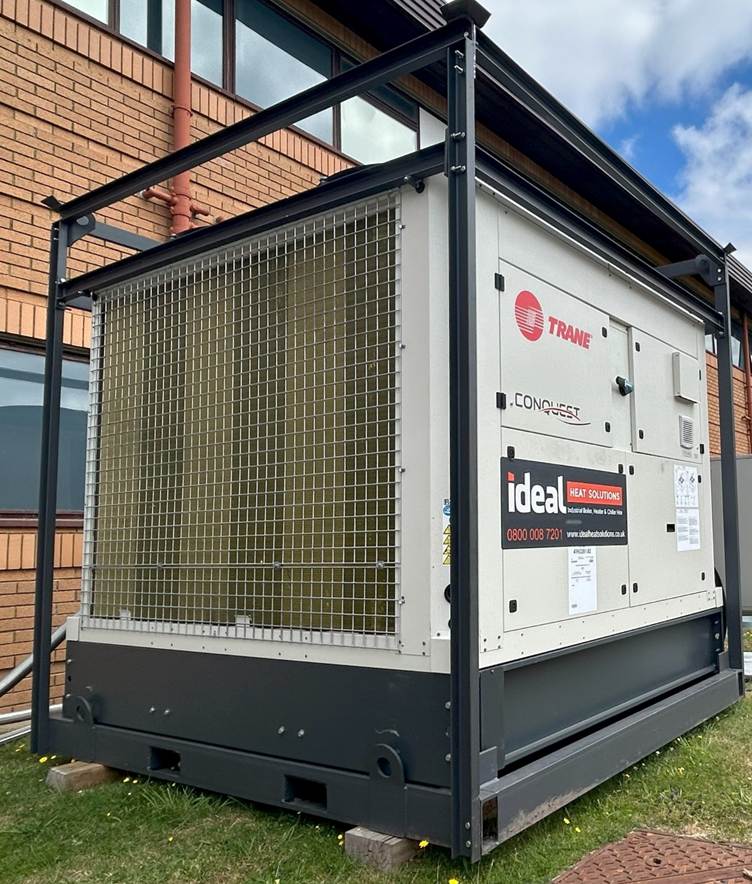
Why Planned Chiller Hire Is Essential for Facilities Management
Planned maintenance is a fundamental part of managing any building’s HVAC system. Regular servicing extends equipment lifespan, improves efficiency, and reduces the risk of unexpected failure. However, carrying out this work often requires systems to be temporarily shut down.
Without a backup solution, even short periods without cooling can have serious consequences. In commercial environments, this may result in uncomfortable working conditions or disruption to tenants. In more critical settings, such as healthcare or data centres, the impact can be far more significant.
Planned chiller hire provides a practical solution by maintaining stable temperatures throughout the maintenance period. Instead of working around cooling limitations, facilities managers can proceed with confidence, knowing that operations will continue as normal.
When Is Planned Chiller Hire Used?
Planned chiller hire is used in a wide range of scenarios where cooling systems must be taken offline. One of the most common is routine servicing, where the permanent chiller requires inspection, cleaning, or component replacement. During this time, the system cannot provide cooling, making a temporary solution essential.
It is also widely used during major refurbishment or replacement projects. When an existing chiller plant is being upgraded or replaced entirely, the process can take weeks or even months. Temporary chiller hire ensures that cooling is maintained throughout the project.
Other applications include upgrades to pipework or pump systems, commissioning of new plant, and building extensions where additional cooling capacity is required. In each case, the temporary chiller acts as a bridge, supporting operations while permanent systems are modified or replaced.
The Advantages of Planning Ahead
One of the key benefits of planned chiller hire is the level of control it provides. By arranging the hire in advance, facilities managers can ensure that the right equipment is available, correctly specified, and delivered at the right time.
From a financial perspective, planned hire is typically more cost-effective than emergency hire. Pre-booked equipment avoids out-of-hours charges and allows for more competitive pricing. It also reduces the risk of limited availability during peak demand periods, particularly in the summer months when cooling requirements are highest.
Operationally, planning ahead allows for a more structured installation process. Engineers can carry out a full site survey, identify connection points, and prepare a detailed plan before any work begins. This ensures that the transition from permanent to temporary cooling is smooth and well-coordinated.
Perhaps most importantly, planned hire eliminates uncertainty. Instead of reacting to issues as they arise, facilities managers can take a proactive approach, ensuring that cooling is maintained without compromise.
How Planned Chiller Hire Works
The process begins with a site survey, where our sales team assess the existing system and determine how the temporary chiller will be integrated. This includes reviewing the capacity of the permanent plant, identifying suitable connection points, and confirming access for delivery and installation.
Once the requirements are understood, the appropriate chiller is selected from the hire fleet. This may be a cooling-only unit for standard air conditioning applications or a heat pump chiller where both heating and cooling are required.
The equipment is then reserved for the agreed dates, ensuring availability when the maintenance works begin. Installation is carefully scheduled so that the temporary system is in place before the permanent plant is taken offline.
On the day of installation, engineers position the chiller, connect it to the existing system, and commission the unit. This involves verifying flow rates, pressures, and temperatures to ensure the system is operating correctly. Once complete, the temporary chiller takes over, allowing maintenance work to proceed without affecting the building’s cooling.
Throughout the hire period, performance is monitored using Trane Connect, providing real-time insight into system operation and ensuring any issues can be addressed promptly.
Integration with Existing HVAC Systems
A critical aspect of planned chiller hire is ensuring that the temporary system integrates seamlessly with the existing infrastructure. In most cases, this involves connecting the hire chiller directly into the building’s chilled water circuit.
However, additional equipment may be required to support the system. Buffer tanks can help stabilise water temperatures, while pumps ensure adequate flow throughout the system. Flexible hoses and fittings are used to connect the temporary unit safely and efficiently.
Working with a specialist provider ensures that all of these elements are considered as part of a complete solution. Rather than treating the chiller as a standalone unit, the entire system is designed to operate reliably within the specific conditions of the site.
Key Considerations for Facilities Managers
When planning a temporary chiller hire, there are several factors that should be considered early in the process.
Connection points should be clearly identified to ensure the temporary system can be integrated efficiently. Ideally, these should be located close to the plant room to minimise pipe runs and reduce potential pressure losses.
Power supply is another important consideration. Larger chillers require sufficient electrical capacity, and in some cases, a temporary generator may be needed if the main supply is affected during maintenance works.
Space and access must also be assessed. The hire chiller needs to be positioned safely, with adequate clearance for operation and maintenance. Delivery routes should be confirmed in advance to avoid delays.
Finally, communication is key. Informing building occupants and stakeholders about the planned works helps manage expectations and ensures that any potential disruption is understood and minimised.

Conclusion
Planned chiller hire is an essential tool for maintaining cooling continuity during HVAC maintenance and upgrade projects. By taking a proactive approach, facilities managers can ensure that systems are serviced or replaced without affecting the operation of the building.
With the right planning, equipment, and support, it is possible to carry out even complex projects while maintaining stable and reliable cooling. Temporary chiller hire provides the flexibility and control needed to achieve this, making it a valuable part of any facilities management strategy.
Frequently Asked Questions
What is planned chiller hire?
Planned chiller hire is the pre-arranged rental of a temporary chiller to maintain cooling during scheduled maintenance, upgrades, or replacement of permanent HVAC systems.
How far in advance should I book a temporary chiller?
It is best to arrange planned chiller hire as early as possible, particularly during peak summer periods when demand is high. Early booking ensures availability and allows time for proper planning.
Can a temporary chiller be installed before maintenance begins?
Yes, the temporary system is typically installed and commissioned before the permanent chiller is taken offline, ensuring continuous cooling with no interruption.
Is planned chiller hire more cost-effective than emergency hire?
Yes, planned hire is generally more cost-effective as it avoids premium charges associated with urgent callouts and allows for better pricing through advance booking.
Will the temporary chiller work with my existing system?
Temporary chillers are designed to integrate with existing chilled water systems, allowing them to replace or support the permanent plant during maintenance.
Do you provide full installation and support?
Yes, Ideal Heat Solutions provides a complete service including site survey, delivery, installation, commissioning, and ongoing support throughout the hire period.
How long can I hire a chiller for planned maintenance?
Hire periods can range from a few days to several months, depending on the scope of the maintenance or upgrade project.
Need planned chiller hire in the UK?
Call Ideal Heat Solutions today or complete our quick online form to arrange a free site survey and quotation.