

When temperatures rise, so does the pressure on your building’s cooling system.
For facilities managers, summer isn’t just about keeping occupants comfortable. It’s about protecting business continuity, maintaining safe working environments and ensuring critical operations aren’t disrupted by an unexpected loss of cooling.
A chiller or air conditioning failure in the middle of winter may be inconvenient. The same failure during a summer heatwave can quickly become a much bigger problem.
Offices become uncomfortable for employees, hospital environments become harder to manage, classrooms overheat, server rooms face rising temperatures and manufacturing processes can be affected. In some buildings, a prolonged loss of cooling may even force areas to close until temperatures return to safe operating levels.
That’s why many organisations now include temporary cooling hire as part of their business continuity planning.
Whether you’re preparing for planned maintenance, replacing ageing cooling equipment or responding to an emergency chiller breakdown, temporary cooling solutions help maintain comfortable conditions while permanent systems are repaired or upgraded.
At Ideal Heat Solutions, we provide temporary chillers, portable air conditioning units and complete temporary cooling packages designed to keep commercial buildings operating throughout the summer months.
Why Does Summer Put More Pressure on Cooling Systems?
Cooling equipment works hardest when outdoor temperatures are at their highest.
As ambient temperatures increase, chillers and air conditioning systems often need to operate for longer periods and at higher capacities simply to maintain the same indoor conditions.
For newer equipment, this may not present a problem. However, older systems or those approaching the end of their service life can begin to struggle when demand peaks.
A common challenge facilities managers face is that cooling equipment often performs reliably for much of the year, only for weaknesses to become apparent during periods of sustained hot weather when there is little spare capacity available.
This can result in:
- Unexpected chiller breakdowns
- Reduced cooling performance
- Rising internal temperatures
- Hot spots throughout the building
- Increased strain on mechanical equipment
- Disruption to occupants and day-to-day operations
By the time these issues become apparent, outside temperatures are often already high, making a fast response essential.
Planning before the summer season allows potential risks to be identified before they affect the building and its occupants.
What Happens When a Cooling System Fails?
The impact of losing cooling extends far beyond occupant comfort.
In many commercial buildings, cooling plays an essential role in maintaining safe operating conditions, protecting equipment and supporting day-to-day business activities.
The consequences will depend on how the building is used, but common issues include reduced productivity, overheating equipment, uncomfortable working conditions and disruption to essential services.
For example:
- Healthcare facilities may need to maintain tightly controlled temperatures to support patient care and protect sensitive medical equipment.
- Commercial offices rely on comfortable environments to help employees work effectively during periods of high temperatures.
- Schools and universities can become difficult learning environments if classrooms overheat during teaching or examination periods.
- Industrial facilities often require stable temperatures to protect manufacturing processes and sensitive machinery.
- Server rooms and data centres depend on continuous cooling to help prevent equipment overheating and minimise the risk of downtime.
The longer a cooling failure continues, the greater the potential impact on building operations.
For this reason, many facilities managers now view temporary cooling not simply as an emergency response, but as an important part of their resilience strategy.
Contingency planning might be the best option for you: https://www.idealheatsolutions.co.uk/contingency-planning/
Planned Cooling Cover vs Emergency Cooling Hire
Temporary cooling equipment is typically used in one of two situations: planned projects or unexpected failures.
Understanding the difference helps determine the most appropriate solution.
Planned Temporary Cooling
Many cooling projects are scheduled months in advance.
Chillers may need replacing, HVAC systems might be undergoing refurbishment or planned maintenance could require sections of the cooling system to be taken offline.
Installing temporary cooling before work begins allows the building to remain operational throughout the project.
Rather than reacting to a loss of cooling, facilities managers can plan the installation around contractors, building occupancy and project milestones.
This approach can help:
- Maintain comfortable temperatures throughout the project.
- Reduce disruption for staff, visitors and occupants.
- Improve project coordination.
- Avoid delays caused by waiting for temporary equipment.
- Provide greater certainty when managing maintenance programmes.
Planned cooling cover is particularly valuable in hospitals, commercial offices, educational buildings and other facilities where maintaining a controlled environment is essential.
Emergency Temporary Cooling
Not every breakdown can be predicted.
Mechanical failures, electrical faults and ageing equipment can all result in an unexpected loss of cooling, often at the worst possible time.
When this happens, temporary cooling hire provides a practical way to restore cooling while permanent repairs are arranged.
Depending on the application, this may involve temporary chillers, portable air conditioning units, air handling units or a complete engineered cooling solution designed around the building’s requirements.
The correct solution will always depend on the results of a site survey, the cooling load, available power supplies and how quickly cooling needs to be restored.
Regardless of the cause, having a contingency plan already in place allows facilities managers to respond more effectively when unexpected failures occur.
Why Planning Ahead Makes a Difference
The best time to think about temporary cooling isn’t during a heatwave. It’s before the warmer weather arrives.
Many cooling failures occur when systems are working at their hardest, leaving little opportunity to plan the response. By reviewing your cooling infrastructure in spring or ahead of major maintenance works, you can identify potential risks before they become operational issues.
A proactive approach allows facilities managers to assess the condition of existing equipment, understand where temporary cooling may be required and develop a contingency plan should a breakdown occur.
Planning ahead can also help:
- Reduce disruption during planned maintenance.
- Improve coordination with contractors.
- Identify the most suitable temporary cooling solution.
- Confirm power and installation requirements.
- Minimise delays if emergency cooling is needed.
Even if temporary equipment is never deployed, having a contingency plan provides reassurance that the building can continue operating if permanent cooling systems fail.
How Do You Choose the Right Temporary Cooling Solution?
Not every building has the same cooling requirements, which means there is no one-size-fits-all solution.
The right temporary cooling equipment will depend on several factors, including the size of the building, the cooling load, available power supplies, existing HVAC infrastructure and how the cooled air needs to be distributed.
A site survey is normally the first step in determining the most appropriate solution.
Some projects may only require cooling in a single room, while others may involve maintaining cooling across an entire hospital, office block or manufacturing facility.
The chosen solution should also take account of practical site considerations such as access restrictions, available external space, noise requirements and the duration of the hire period.
Temporary Chillers, Portable Air Conditioning or Air Handling Units?
Facilities managers often ask which type of temporary cooling equipment is best.
The answer depends entirely on the application.
Temporary Chiller Hire
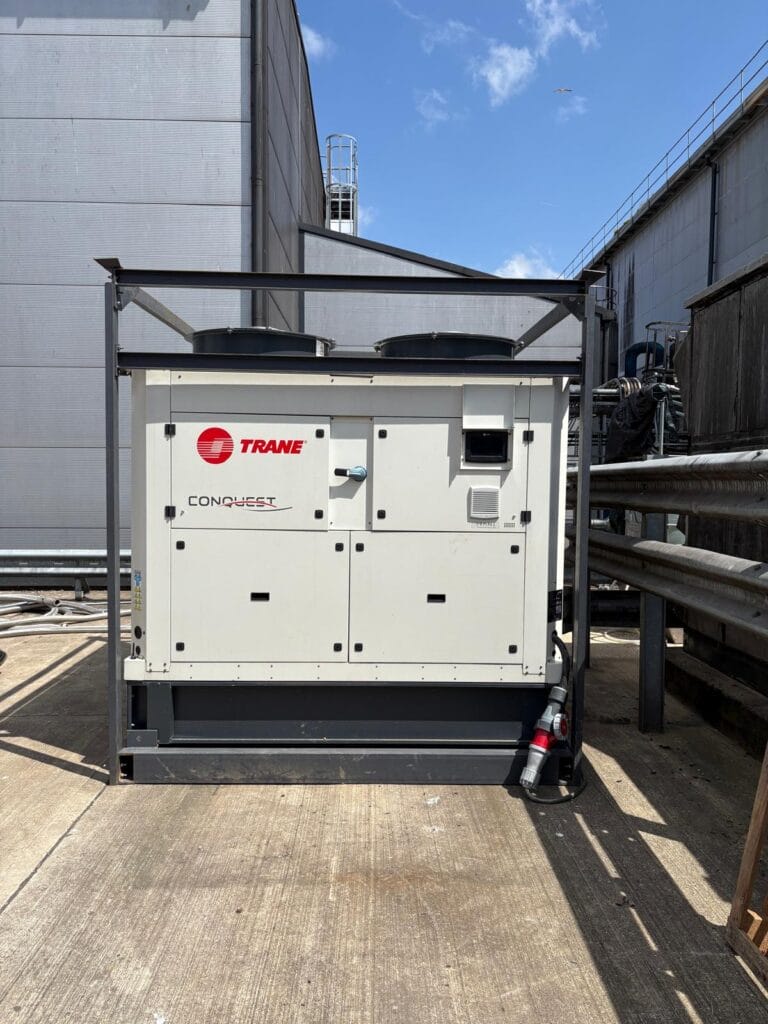
Temporary chillers are typically used where larger commercial cooling systems need to be supported or replaced.
They can integrate with an existing chilled water system and are commonly used during:
- Chiller replacements
- Planned maintenance
- HVAC refurbishments
- Emergency chiller failures
- Additional seasonal cooling demand
Temporary chillers are well suited to hospitals, commercial offices, industrial facilities, universities and other buildings with centralised cooling systems.

Portable Air Conditioning Hire
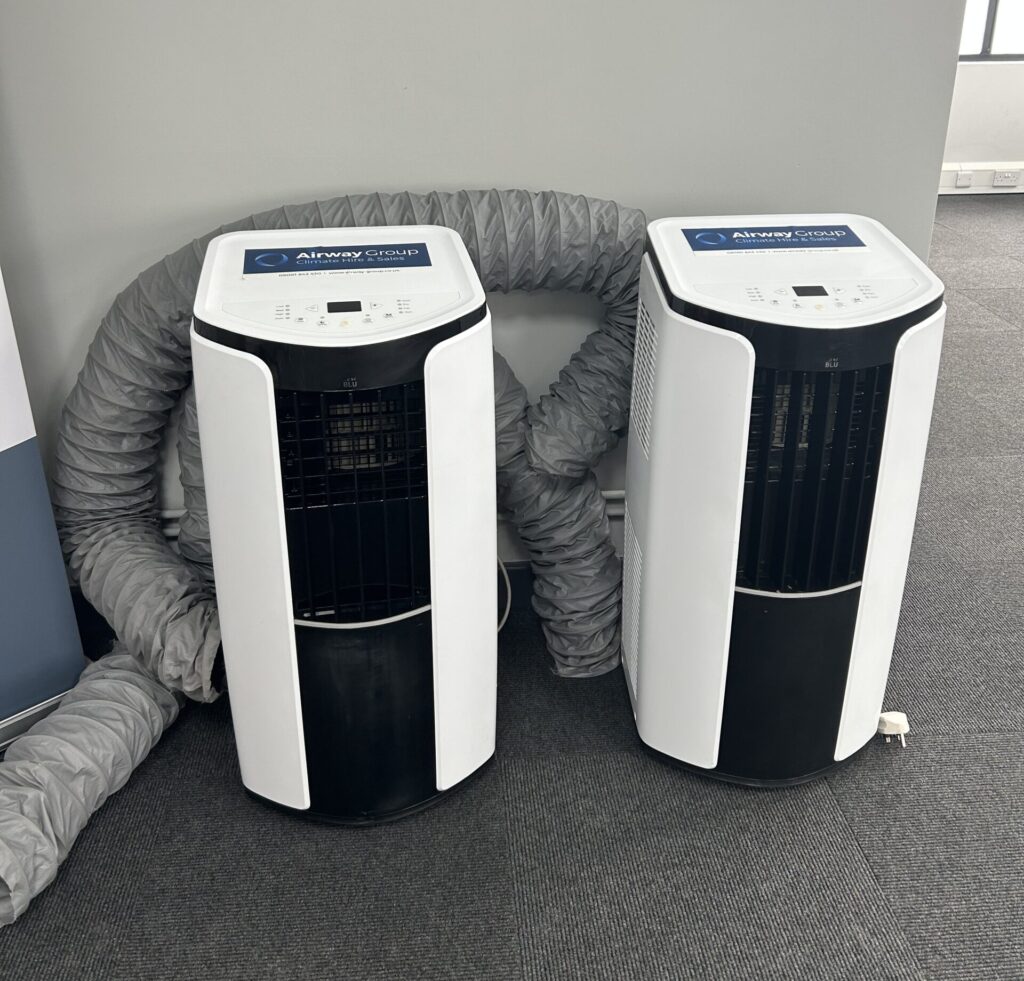
Portable air conditioning units provide localised cooling for individual rooms or smaller spaces.
They are often used where a permanent air conditioning system is unavailable, has failed or additional cooling is required for a short period.
Common applications include:
- Offices
- Meeting rooms
- Classrooms
- Temporary buildings
- Retail units
- Small server rooms
Portable units can often be deployed quickly and require minimal installation, making them a practical option for smaller cooling requirements.
Air Handling Units
In some commercial buildings, temporary air handling units (AHUs) are used alongside temporary chillers to distribute cooled air throughout the building.
While the chiller produces chilled water, the AHU uses that chilled water to cool and circulate conditioned air through the ventilation system.
This type of solution is commonly used where maintaining indoor air quality and consistent temperature control is just as important as providing cooling capacity.
AHUs are often specified for larger commercial buildings, healthcare facilities and manufacturing environments where an integrated temporary HVAC solution is required.

Which Areas Should Be Prioritised?
When cooling capacity is limited, identifying the most critical areas of a building helps ensure temporary equipment is deployed where it will have the greatest operational benefit.
Priority areas often include:
- Hospital wards and treatment areas
- Data centres and server rooms
- Laboratories
- Manufacturing processes
- Occupied office spaces
- Classrooms and lecture theatres
- Retail trading areas
- Reception spaces
The priority will vary depending on how the building is used.
For example, a healthcare facility may prioritise patient areas and medical equipment, while a commercial office may focus on maintaining comfortable working conditions for employees.
Understanding these priorities before equipment is required allows temporary cooling systems to be designed more effectively.
Practical Planning Considerations
Every temporary cooling installation is different, and careful planning helps ensure the equipment can be installed safely and efficiently.
Before recommending a solution, engineers will typically assess:
- Available electrical supplies.
- Existing chilled water connections.
- External space for equipment.
- Equipment access routes.
- Pipework routes.
- Noise restrictions.
- Drainage requirements.
- Building occupancy.
- Health and safety considerations.
On many commercial sites, installation logistics can be just as important as cooling capacity.
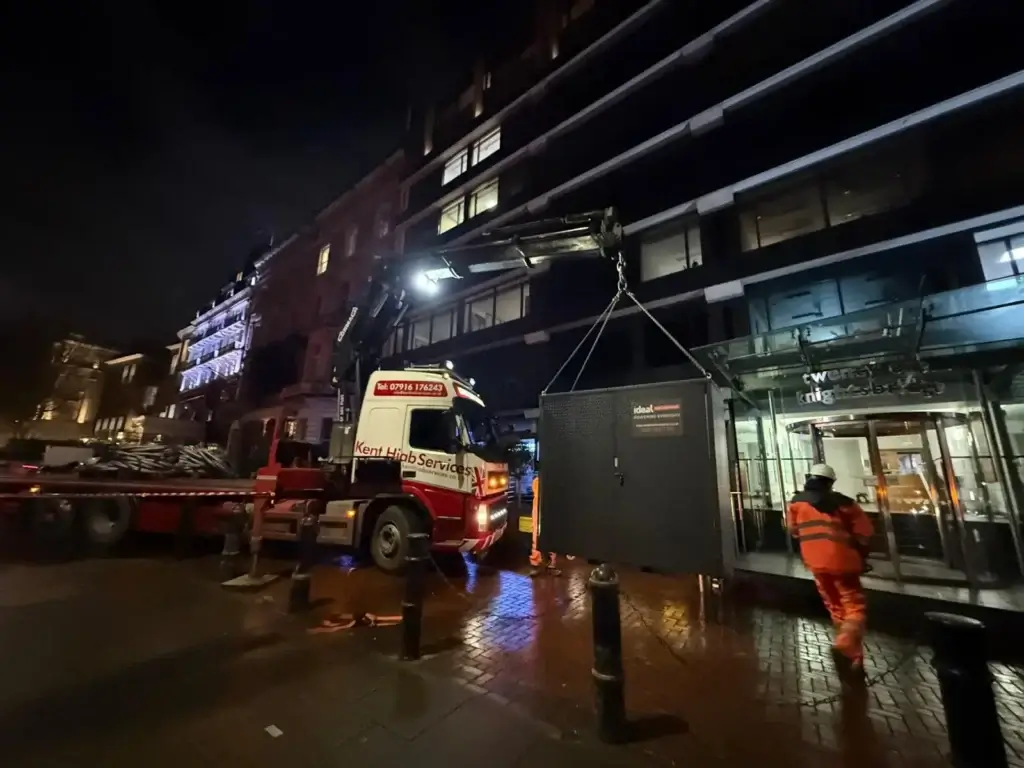
Restricted access, rooftop plant areas, confined courtyards or busy public spaces may all influence how equipment is delivered, positioned and connected.
By identifying these factors during the planning stage, facilities managers can avoid unnecessary delays once temporary cooling is required.
Supporting a Wide Range of Commercial Facilities
Temporary cooling hire supports organisations across many sectors, each with its own operational challenges.
Healthcare
Hospitals, clinics and care homes rely on temperature-controlled environments to support patient wellbeing, protect sensitive equipment and maintain comfortable conditions for staff and visitors.
Education
Schools, colleges and universities benefit from reliable cooling during summer teaching, examinations and refurbishment projects, helping create a more comfortable learning environment.
Commercial Offices
Maintaining a comfortable workplace supports employee wellbeing and productivity while helping organisations continue operating during periods of high temperatures.
Industrial and Manufacturing Facilities
Many production processes rely on controlled temperatures to protect equipment, maintain product quality and support operational efficiency.
Data Centres and Server Rooms
Reliable cooling helps protect critical IT infrastructure from overheating and reduces the risk of service disruption caused by excessive temperatures.
Although the cooling requirements differ, these environments all share one common goal: maintaining business continuity when permanent cooling systems are unavailable.
Why Choose Ideal Heat Solutions for Temporary Cooling Hire?
Every commercial building has different cooling requirements. The size of the facility, the existing HVAC system, the available power supply and the urgency of the project all influence the most appropriate temporary cooling solution.
At Ideal Heat Solutions, we work with facilities managers, contractors and estates teams to provide engineered temporary cooling solutions that are tailored to each site rather than relying on a one-size-fits-all approach.
Our service includes:
- Site surveys and technical advice
- Temporary cooling system design
- Temporary chiller hire
- Portable air conditioning hire
- Air handling units (where required)
- Temporary pipework and ancillary equipment
- Delivery, installation and commissioning
- Ongoing technical support throughout the hire period
- Planned and emergency cooling solutions
Whether you’re preparing for a planned chiller replacement, carrying out major refurbishment works or responding to an unexpected breakdown during the summer, our team can recommend a temporary cooling solution that helps maintain business continuity while permanent systems are repaired or replaced.
Conclusion
Summer places greater demands on commercial cooling systems, and when temperatures rise, even well-maintained equipment can come under increased strain.
For facilities managers, the challenge isn’t simply restoring cooling after a breakdown. It’s ensuring occupants remain comfortable, critical equipment is protected and business operations continue with as little disruption as possible.
Temporary cooling hire provides a practical solution for both planned and unexpected situations.
Whether you’re replacing ageing plant, carrying out scheduled maintenance or responding to an emergency chiller failure, temporary cooling equipment can help maintain safe, controlled environments until permanent systems are back in service.
Planning ahead is equally important. Reviewing your cooling infrastructure before peak summer temperatures arrive allows potential risks to be identified early and ensures a suitable contingency plan is in place if cooling becomes critical.
By combining early planning with the right temporary cooling solution, facilities managers can improve resilience, minimise disruption and keep their buildings operational throughout the warmer months.
Contact Ideal Heat Solutions
If you’re preparing for summer, planning maintenance works or need support following an unexpected cooling system failure, Ideal Heat Solutions can provide a temporary cooling solution tailored to your building and operational requirements.
We supply:
- Temporary Chiller Hire
- Cooling-Only Chiller Hire
- Heat Pump Chiller Hire
- Portable Air Conditioning Hire
- Air Handling Units
- Temporary Boiler Hire
- Generator Hire
- Fuel Tank Hire
Our experienced team can assess your cooling requirements, recommend the most appropriate equipment and provide a complete temporary cooling package to support your project.
To discuss your requirements or arrange a site survey, contact Ideal Heat Solutions today.
🌐 www.idealheatsolutions.co.uk
Frequently Asked Questions
When should I consider temporary cooling hire?
Temporary cooling hire should be considered whenever there’s a risk that your permanent cooling system won’t be able to meet demand. This may include planned maintenance, chiller replacement projects, ageing equipment, seasonal demand peaks or unexpected breakdowns. Planning ahead allows facilities managers to put contingency measures in place before cooling becomes critical, helping reduce disruption if permanent systems are taken offline.
How quickly can temporary cooling equipment be installed?
The timescale depends on factors such as your location, the type of equipment required and site access arrangements. Smaller portable air conditioning units can often be installed more quickly than large temporary chiller systems, which may require pipework, electrical connections and commissioning. Following an initial assessment, the most appropriate deployment programme can be agreed based on your site’s requirements.
Can temporary cooling systems work alongside existing HVAC equipment?
Yes. In many cases, temporary cooling equipment is installed to supplement an existing system rather than replace it entirely. This is particularly useful where additional cooling capacity is required during periods of high demand or while part of the permanent system is undergoing maintenance. The most suitable approach will depend on the existing HVAC infrastructure and should be confirmed during a site survey.
What type of temporary cooling equipment is best for my building?
The most appropriate solution depends on several factors, including the cooling load, the size of the building, available power supplies and how the cooling needs to be distributed. Larger buildings with chilled water systems often benefit from temporary chiller hire, while individual rooms may only require portable air conditioning units. More complex projects may also require air handling units or additional ancillary equipment.
Which buildings benefit from temporary cooling hire?
Temporary cooling hire is suitable for a wide range of commercial and public sector buildings, including hospitals, healthcare facilities, offices, schools, universities, hotels, manufacturing sites, retail premises and data centres. Any building where maintaining a controlled internal environment is important during maintenance, refurbishment or unexpected equipment failure may benefit from a temporary cooling solution.
Why is contingency planning important for cooling systems?
Cooling failures often occur during periods of peak demand, when systems are under the greatest strain and the consequences of losing cooling are most significant. Developing a contingency plan before summer allows facilities managers to understand their options, identify suitable temporary equipment and prepare for potential failures before they affect building operations. This proactive approach can improve resilience and support business continuity.