

Underfloor heating has become a popular alternative to traditional radiator systems across a wide range of commercial, residential and public sector buildings. From apartment developments and schools to healthcare facilities and office buildings, underfloor heating provides an efficient and comfortable way of maintaining indoor temperatures.
Despite its growing popularity, many people still ask the same question: how does underfloor heating actually work with a boiler?
The answer is relatively straightforward. The boiler acts as the heat source for the system, heating water which is then circulated through a network of pipes installed beneath the floor. As the warm water moves through the pipework, heat is transferred through the floor surface and radiated evenly throughout the room.
Unlike traditional radiator systems, which heat specific areas within a space, underfloor heating distributes warmth across the entire floor area. This creates a more consistent temperature and can help improve overall comfort levels while operating at lower temperatures than many conventional heating systems.
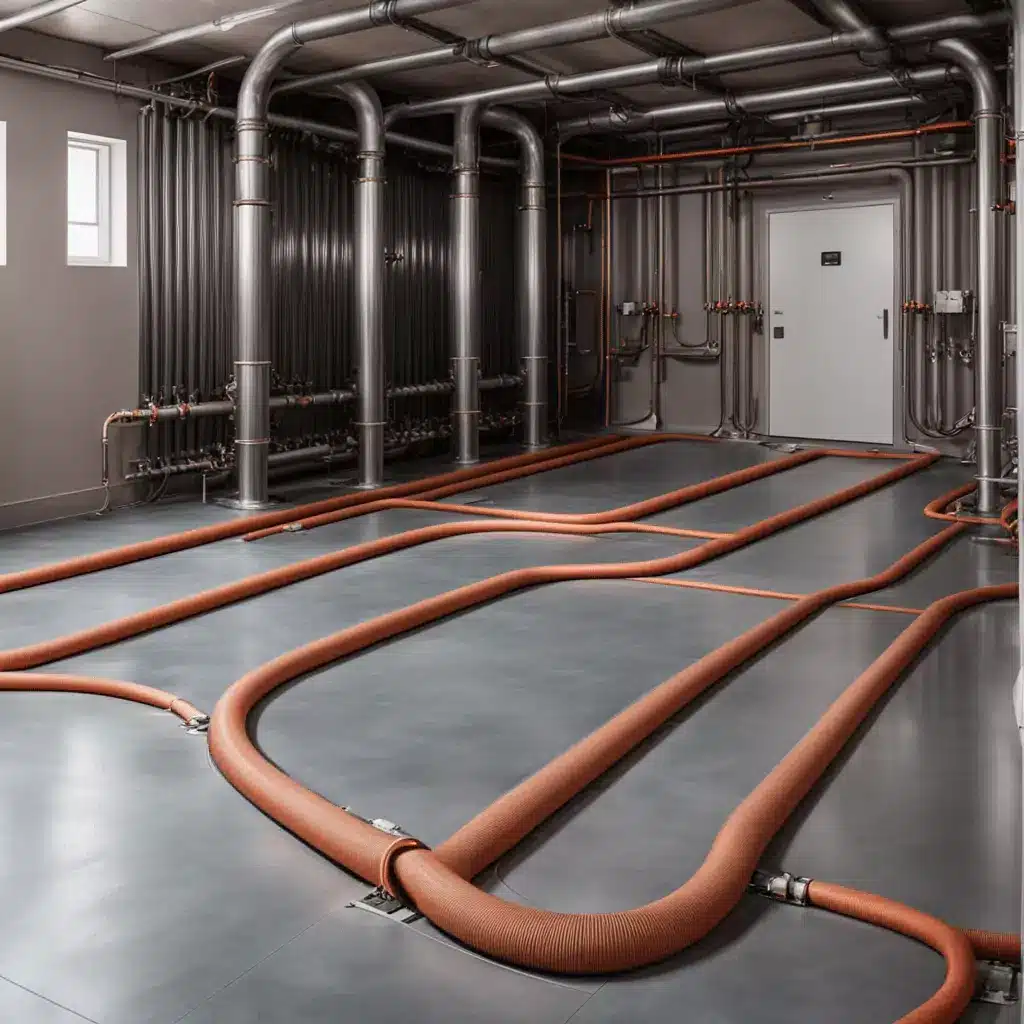
Understanding How Underfloor Heating Works
Most commercial and residential underfloor heating systems use warm water circulating through flexible pipework embedded within the floor structure. This is commonly referred to as a hydronic or wet underfloor heating system.
The boiler heats water to a predetermined temperature before it is pumped through the underfloor heating circuits. As the water flows through the network of pipes, heat is gradually released into the floor above.
The heated floor surface then radiates warmth into the surrounding space, creating an even distribution of heat throughout the room. Because the entire floor acts as a heat emitter, underfloor heating systems can often operate at lower water temperatures than traditional radiator systems while still providing effective heating.
This lower operating temperature is one of the reasons underfloor heating is often considered an energy-efficient solution for modern buildings.
What Type of Boiler Is Best for Underfloor Heating?
Several types of boilers can be used with underfloor heating systems, depending on the application and site requirements.
Gas boilers remain one of the most common choices for permanent installations in commercial and residential buildings. Modern condensing boilers work particularly well with underfloor heating because they operate efficiently at the lower flow temperatures typically required by these systems.
Electric boilers are another popular option, particularly where gas supplies are unavailable or where temporary heating is required. Electric boilers offer precise temperature control and can often be installed more easily than fuel-fired alternatives, making them particularly suitable for construction projects and commissioning activities.
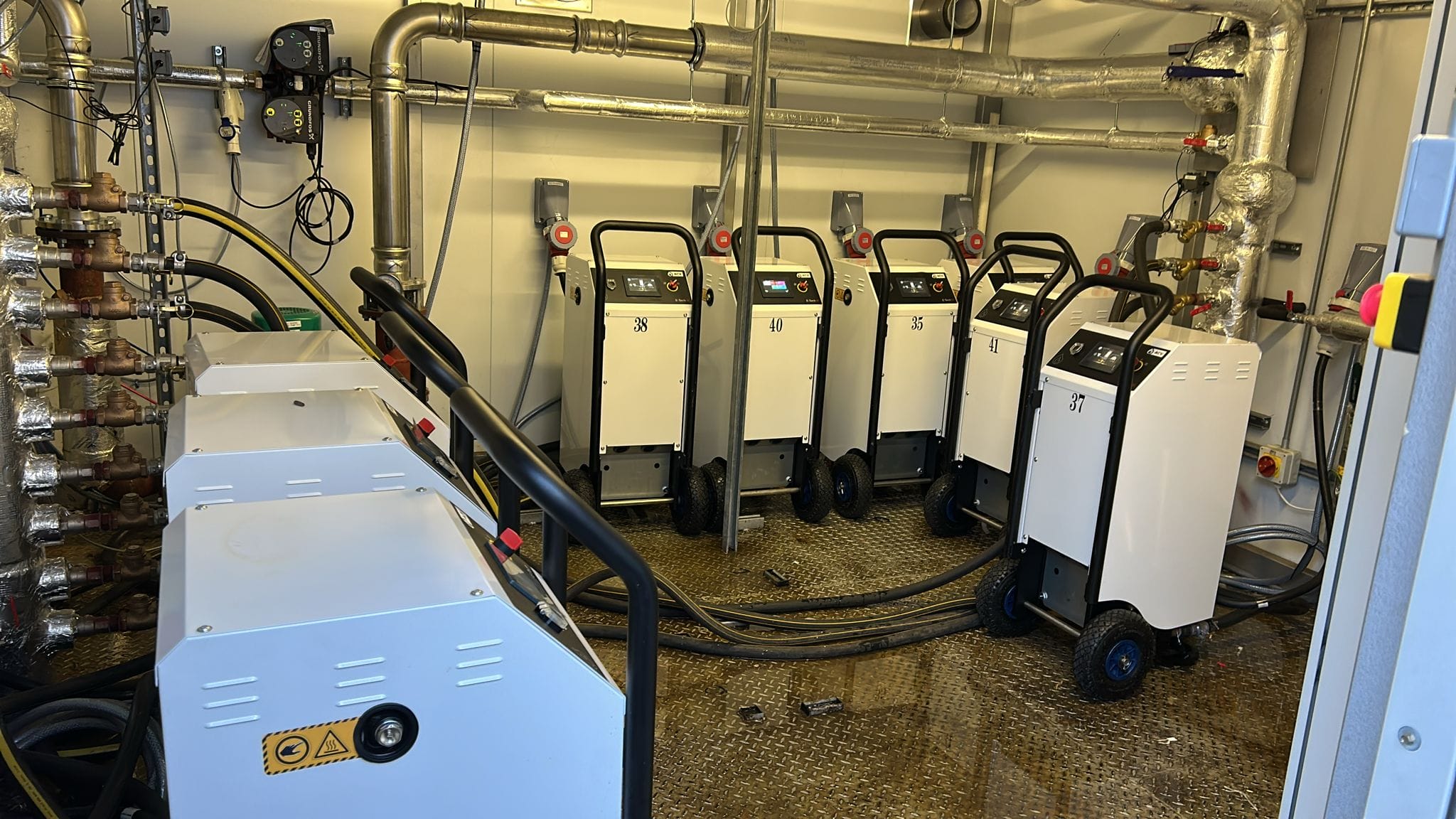
Oil-fired boilers can also be used with underfloor heating systems, although they are generally more common in locations where mains gas is unavailable.
Regardless of the heat source selected, the key requirement is ensuring that the boiler is correctly sized and configured to meet the demands of the underfloor heating system.
Can Temporary Boilers Be Used for Underfloor Heating?
Yes, temporary boilers are regularly used to support underfloor heating systems across construction, refurbishment and maintenance projects.
In many cases, underfloor heating systems need to be commissioned and tested before the permanent heating plant has been installed or brought into operation. Temporary boiler hire provides a practical solution, allowing contractors and developers to introduce heat into the system without delaying the overall project programme.
Temporary boilers are also commonly used when existing heating systems are unavailable due to maintenance works, plant room refurbishments or unexpected breakdowns.
By connecting a temporary boiler to the underfloor heating network, buildings can continue to receive heating while permanent systems are repaired, upgraded or commissioned.
Underfloor Heating During Construction Projects
One of the most common applications for temporary boiler hire is within construction and new-build developments.
As projects approach completion, heating systems often need to be commissioned, tested and balanced before handover. Underfloor heating systems are no exception.
Temporary boilers allow contractors to circulate heated water through the system, enabling engineers to verify performance, check controls and confirm that all heating circuits are operating correctly.
This process helps identify any issues before the building is occupied and provides confidence that the system is functioning as intended.
Underfloor Heating and Screed Drying
Underfloor heating can also play an important role during screed drying.
Many construction projects use underfloor heating systems to assist with the drying process before floor finishes are installed. By introducing controlled heat through the pipework beneath the screed, moisture can be removed more effectively and consistently.
This approach can help support construction programmes by reducing drying times and preparing floors for the next stage of work.
However, it is important that heating is introduced gradually and in accordance with the screed manufacturer’s recommendations. Bringing temperatures up too quickly can lead to cracking or uneven drying, which is why controlled heat from a temporary boiler is often used during this stage of a project.
Why Electric Boiler Hire Is Popular for Underfloor Heating
Electric boiler hire has become increasingly popular for underfloor heating applications, particularly within construction and commissioning environments.
One of the main reasons is the level of control electric boilers provide. Underfloor heating systems rely on relatively low water temperatures, and electric boilers can deliver this consistently and accurately.
Electric boilers also eliminate the need for fuel storage and flue arrangements, making them easier to deploy on many sites. Their compact design and straightforward installation requirements make them particularly useful where temporary heating is required for short-term projects.
For contractors looking to commission underfloor heating systems, dry screed or provide temporary heat before permanent plant is available, electric boiler hire often provides a flexible and efficient solution.
Common Applications for Underfloor Heating
Today, underfloor heating systems can be found across a wide variety of sectors.
Residential developments frequently use underfloor heating to provide efficient and comfortable heating throughout apartments and housing schemes. Commercial buildings often utilise underfloor heating within offices, reception areas and public spaces where aesthetics and comfort are important considerations.
Schools, universities and healthcare facilities also continue to adopt underfloor heating due to its ability to provide consistent temperatures and improved occupant comfort.
Across all of these environments, boilers remain the primary heat source that enables underfloor heating systems to operate effectively.

Conclusion
So, how does underfloor heating work with a boiler?
In simple terms, the boiler heats water which is then circulated through pipework installed beneath the floor. As the heated water flows through the system, warmth is transferred through the floor surface and distributed evenly throughout the space.
Whether the system is powered by a gas boiler, electric boiler or temporary boiler, the principle remains the same.
For construction projects, commissioning activities and screed drying applications, temporary boiler hire can provide an effective way of bringing underfloor heating systems online before permanent plant is available. This helps keep projects moving, supports programme deadlines and ensures systems are fully operational before handover.
Frequently Asked Questions
Does underfloor heating need a boiler?
Most wet underfloor heating systems require a boiler or other heat source to heat the water circulating through the pipework beneath the floor.
Can you use a temporary boiler for underfloor heating?
Yes. Temporary boiler hire is commonly used for commissioning, screed drying, construction projects and situations where permanent heating systems are unavailable.
Are electric boilers suitable for underfloor heating?
Yes. Electric boilers are well suited to underfloor heating because they provide precise temperature control and operate efficiently at the lower temperatures required by these systems.
Can underfloor heating be used to dry screed?
Yes. Underfloor heating is frequently used during screed drying, helping construction projects progress while ensuring floors are prepared for final finishes.
What size boiler do I need for underfloor heating?
The correct boiler size depends on factors such as floor area, heat demand and building design. A professional assessment can help determine the most suitable solution.
Can underfloor heating provide heating for commercial buildings?
Yes. Underfloor heating is widely used across offices, schools, healthcare facilities, apartment developments and other commercial environments.
To learn more or book a free site survey, contact Ideal Heat Solutions today.
📞 CALL US: 0808 301 4183
QUICK FORM FILL: Contact Us – Ideal Heat Solutions
DISCOVER OUR BOILER HIRE RANGE
Explore our latest project case studies
