
Commercial & Industrial HVAC Hire
Maintaining precise process temperatures is essential within food manufacturing. Even small fluctuations can affect product quality, reduce production efficiency and increase the risk of costly downtime. When cooling equipment fails unexpectedly, restoring stable process cooling quickly becomes a priority.
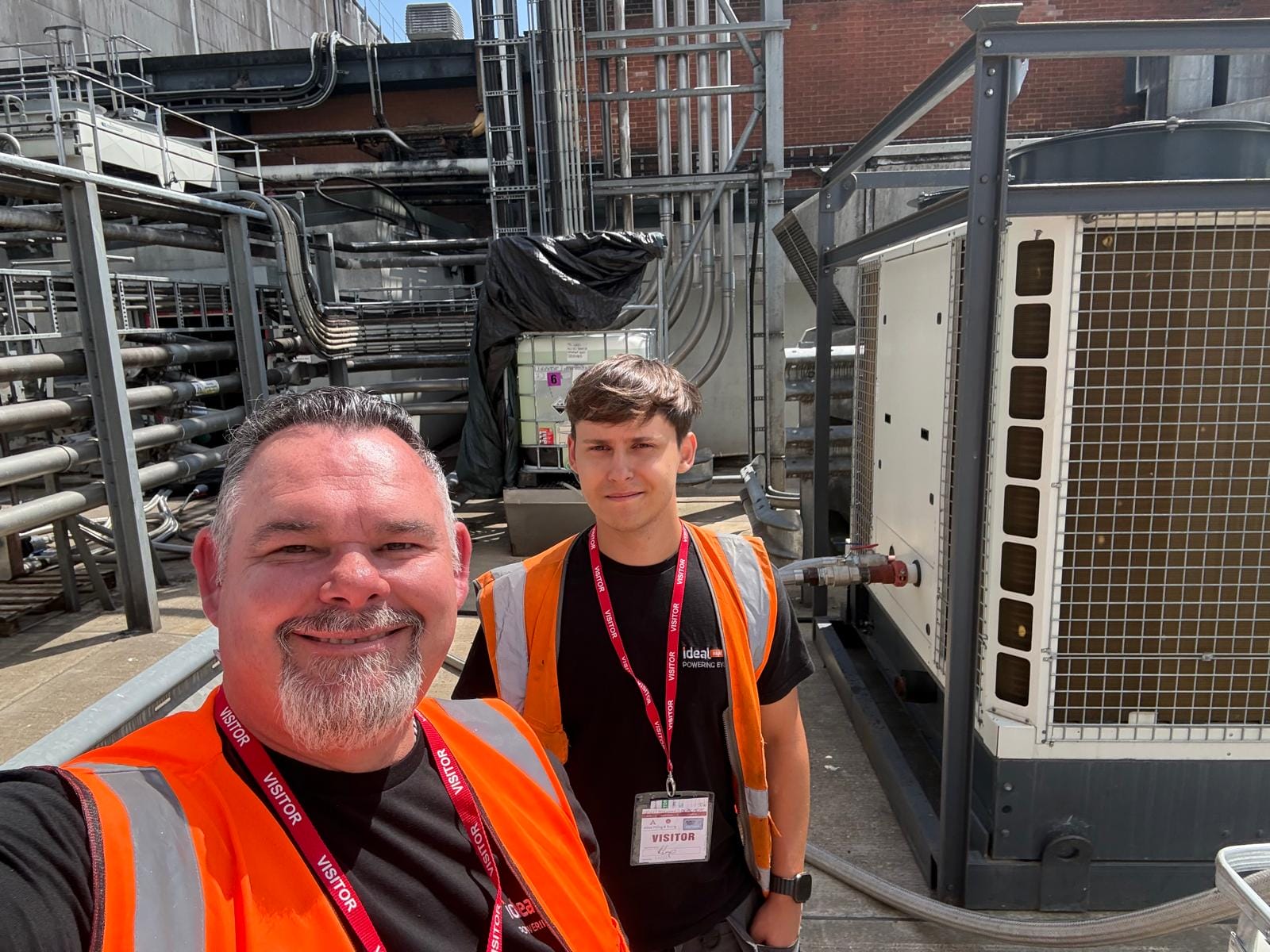
Ideal Heat Solutions was contacted after a manufacturing facility experienced the failure of its existing chiller package, leaving the production process unable to maintain the temperatures required for continuous operation. Rather than shutting down production while permanent repairs were arranged, the site required a temporary process cooling solution capable of delivering reliable performance over a six-week hire period.
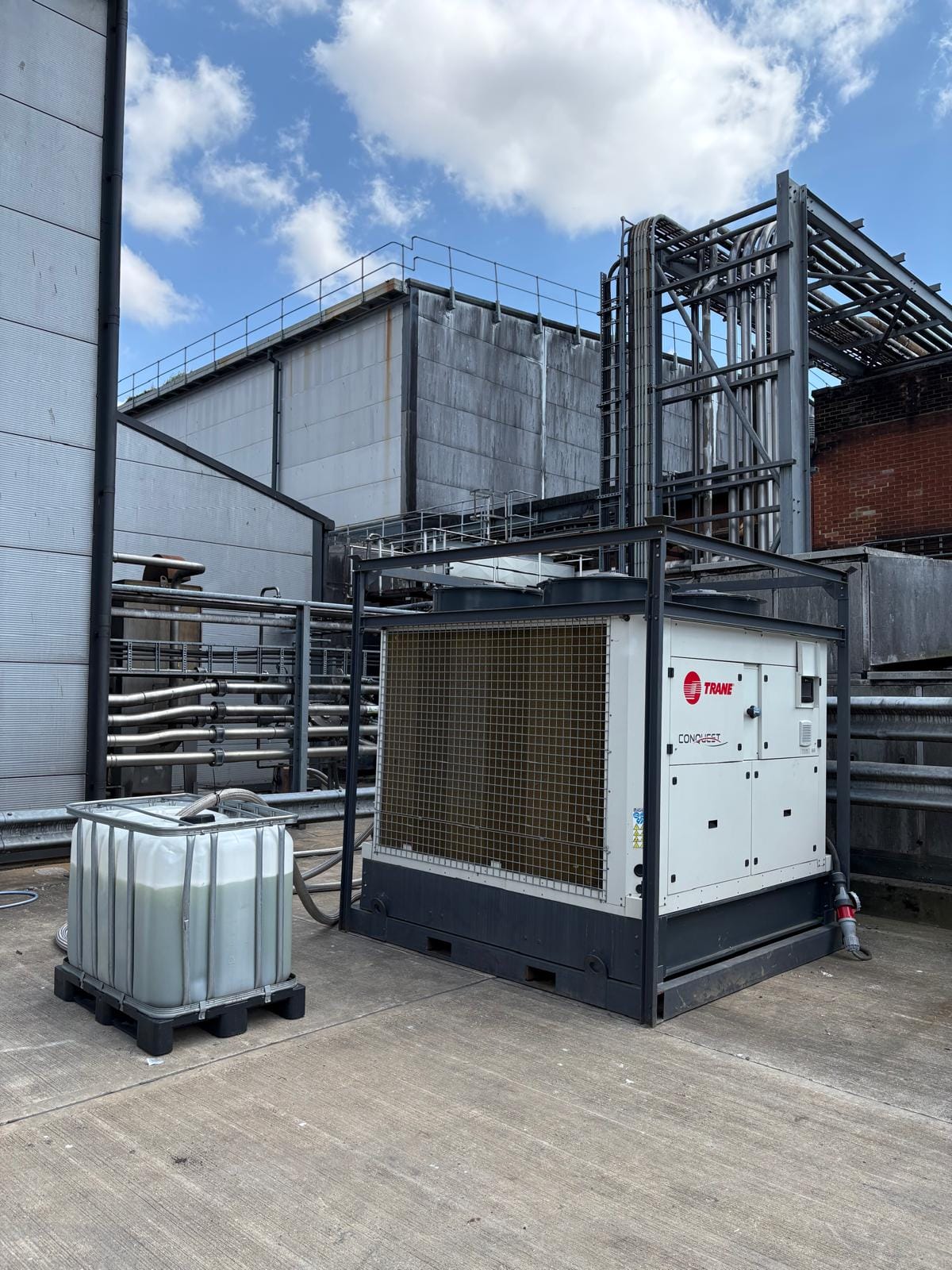
This case study explains how a temporary 200kW chiller, heat exchanger and booster pump package was designed and installed to maintain a consistent cooling temperature throughout the manufacturing process while ensuring hygienic separation between the temporary cooling circuit and the client’s production line.
The manufacturing facility relied on a dedicated cooling system to regulate liquid temperatures within one of its production processes. Following the failure of the permanent chiller installation, the existing system could no longer achieve the required operating temperature, placing production continuity at risk.
Because the application involved food manufacturing, maintaining hygiene standards was just as important as restoring cooling capacity. Any temporary solution had to prevent the cooling medium from coming into direct contact with the production liquid while integrating safely with the existing process.
To meet the client’s operational requirements, the temporary installation needed to:
Achieving these objectives required more than simply supplying a temporary chiller. The complete cooling package had to be designed to integrate with the site’s existing process while maintaining temperature stability throughout continuous production.
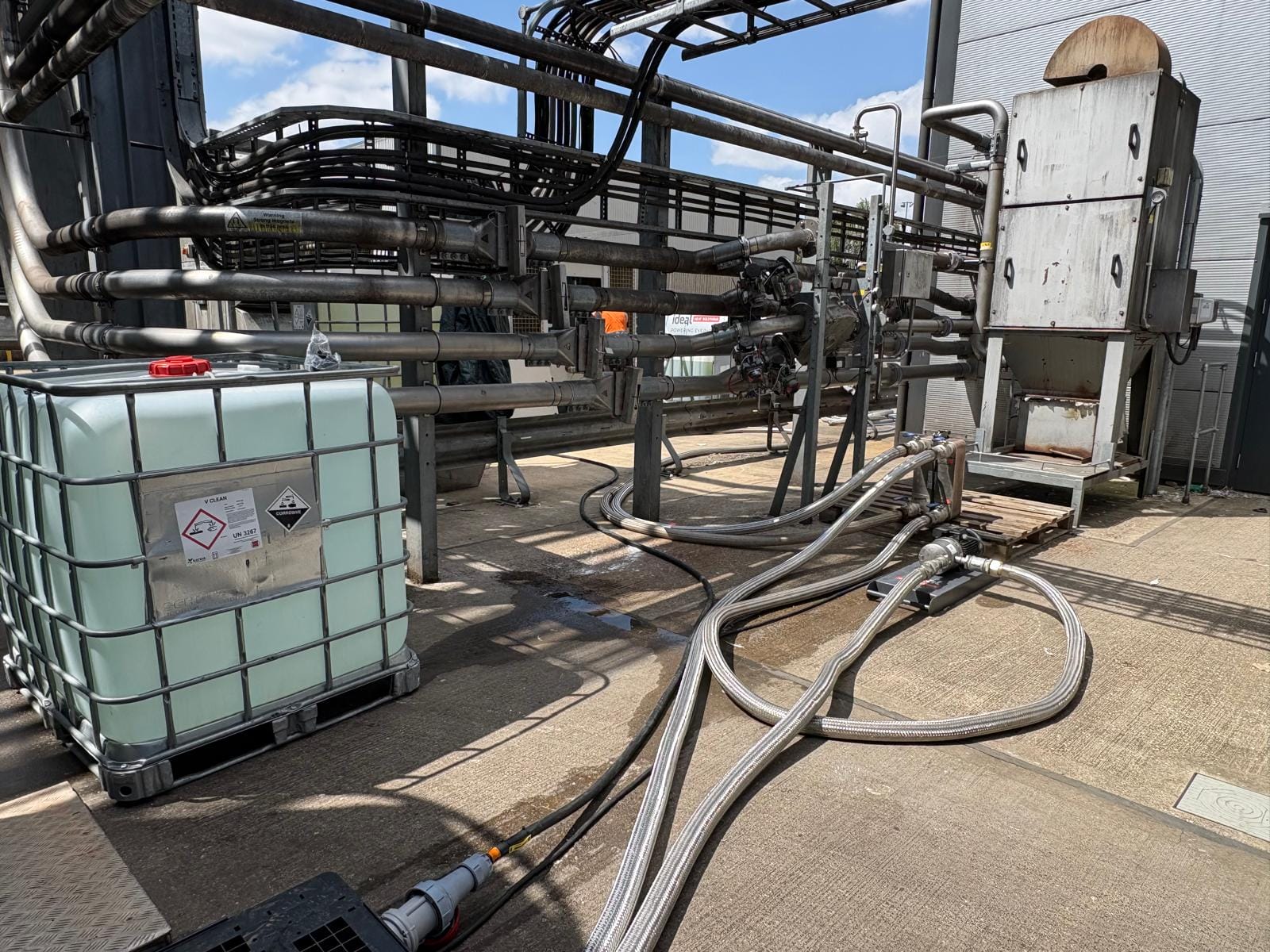
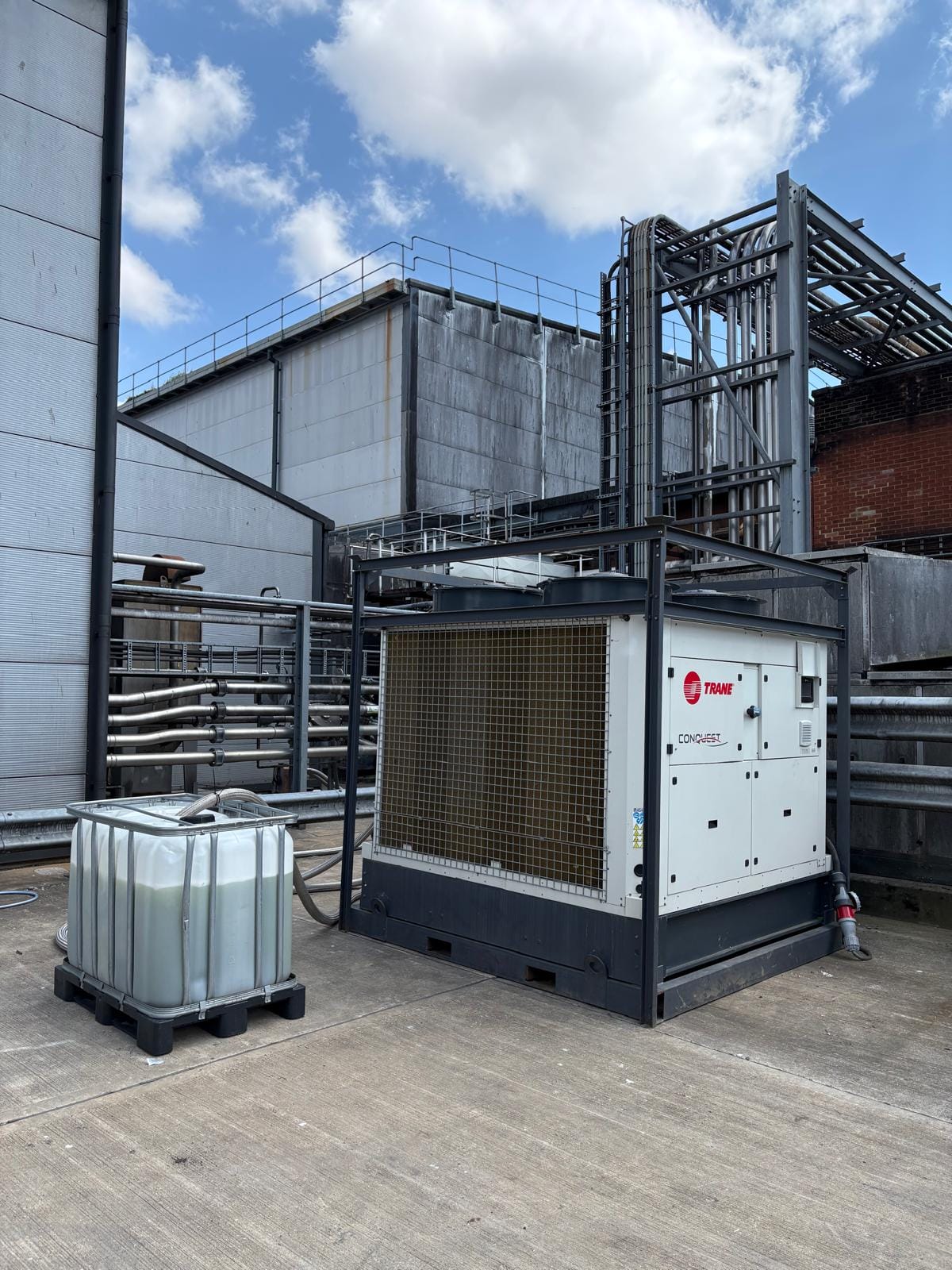
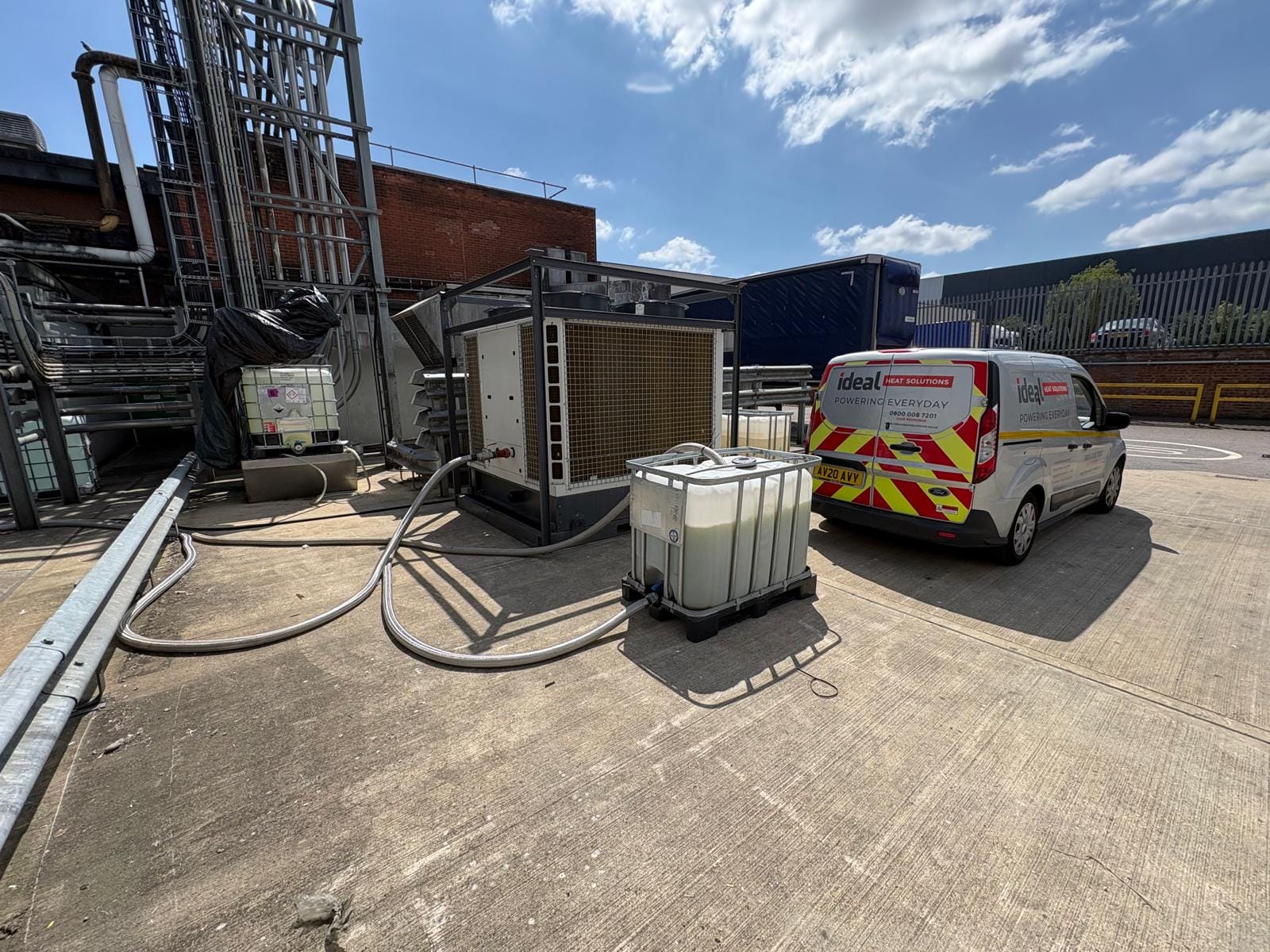
Following an assessment of the site’s cooling requirements, Ideal Heat Solutions supplied a temporary process cooling package centred around a 200kW chiller, supported by a plate heat exchanger, buffer tank and booster pump assembly.
Rather than circulating the client’s process liquid directly through the temporary chiller, the installation used a glycol solution within the primary cooling circuit. The heat exchanger transferred cooling energy into the secondary process circuit while keeping both systems completely separate, an important consideration within food manufacturing environments.
To ensure the temporary installation integrated correctly with the existing production process, the booster pump was selected to match the client’s required flow rates. Before commissioning, the secondary circuit was cleaned and flushed on site with assistance from the client’s hygiene team and mechanical engineers, ensuring the system met operational and cleanliness requirements before entering service.
Once commissioned, the temporary package successfully maintained the required process temperatures, allowing manufacturing to continue while the site’s permanent cooling equipment underwent repair.
Every process cooling application has unique operational requirements, particularly within food manufacturing where hygiene, product quality and production continuity all need to be considered.
Following the initial enquiry, our engineers assessed the cooling demand, existing pipework arrangement and flow requirements before designing a temporary installation that would integrate with the production process without introducing unnecessary complexity.
The survey also identified the most appropriate position for the temporary equipment, allowing safe installation while maintaining access for site personnel throughout the hire period.
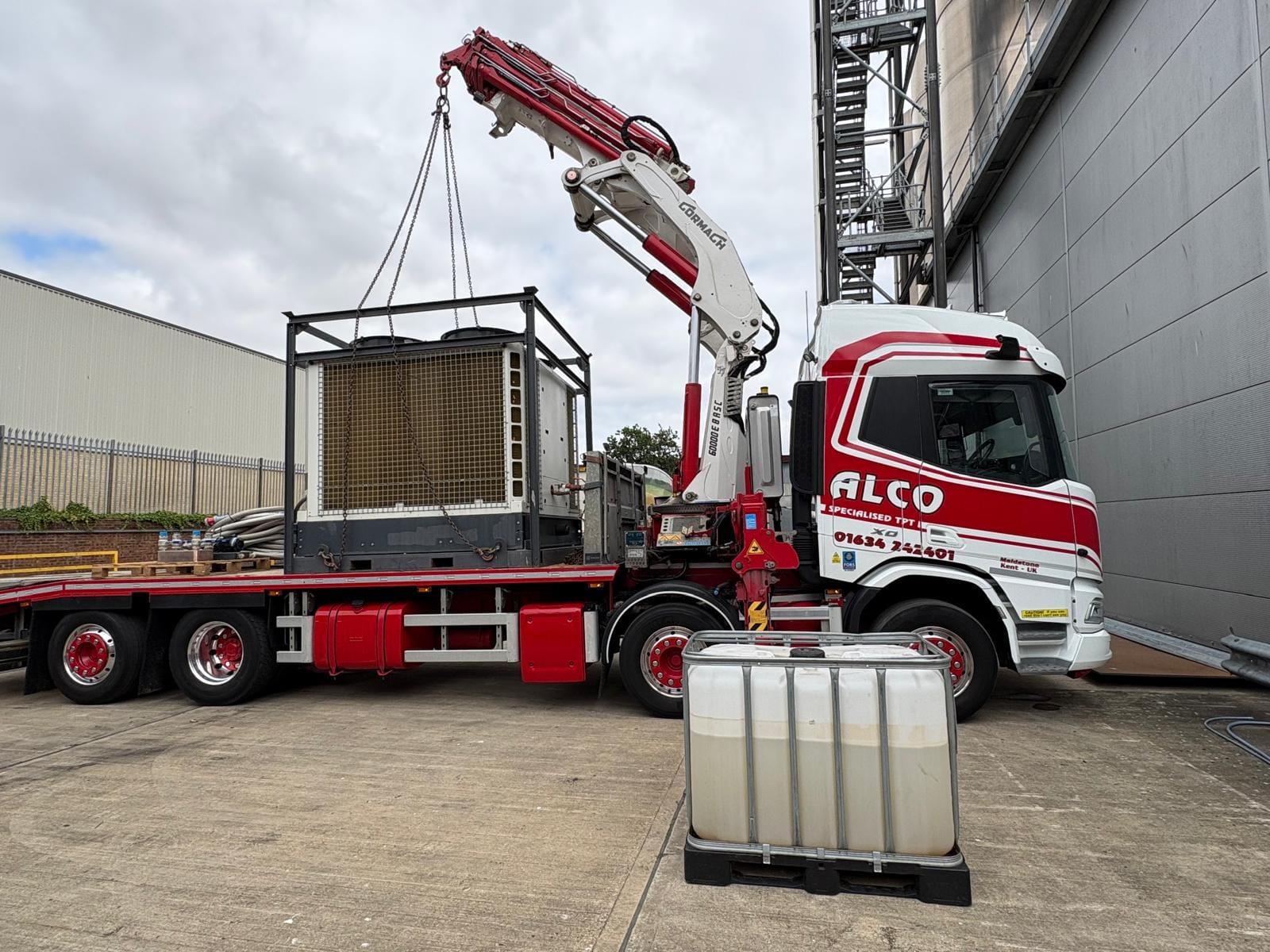
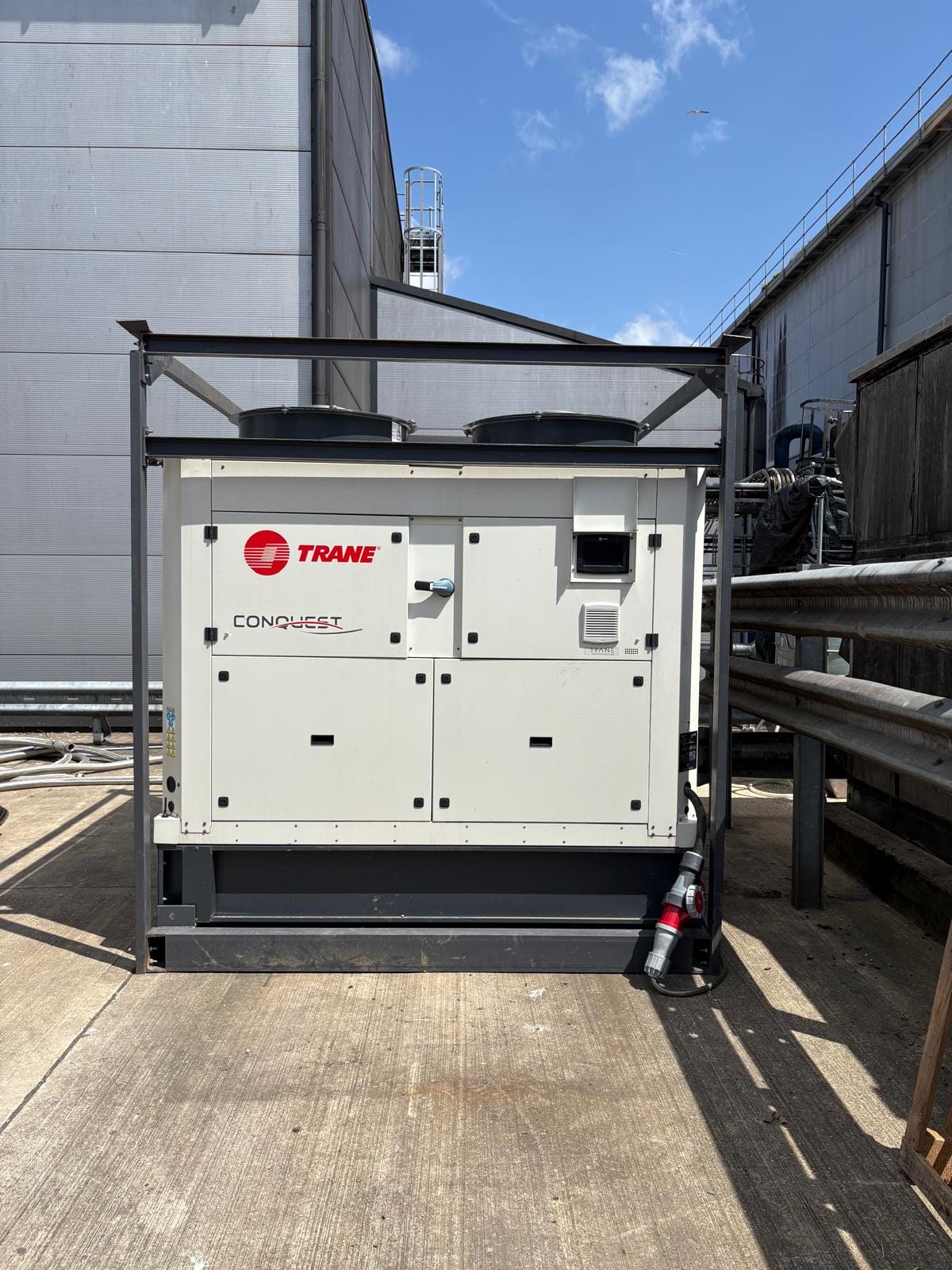
The cooling package was designed around a 200kW temporary chiller, capable of supplying chilled glycol to the primary circuit.
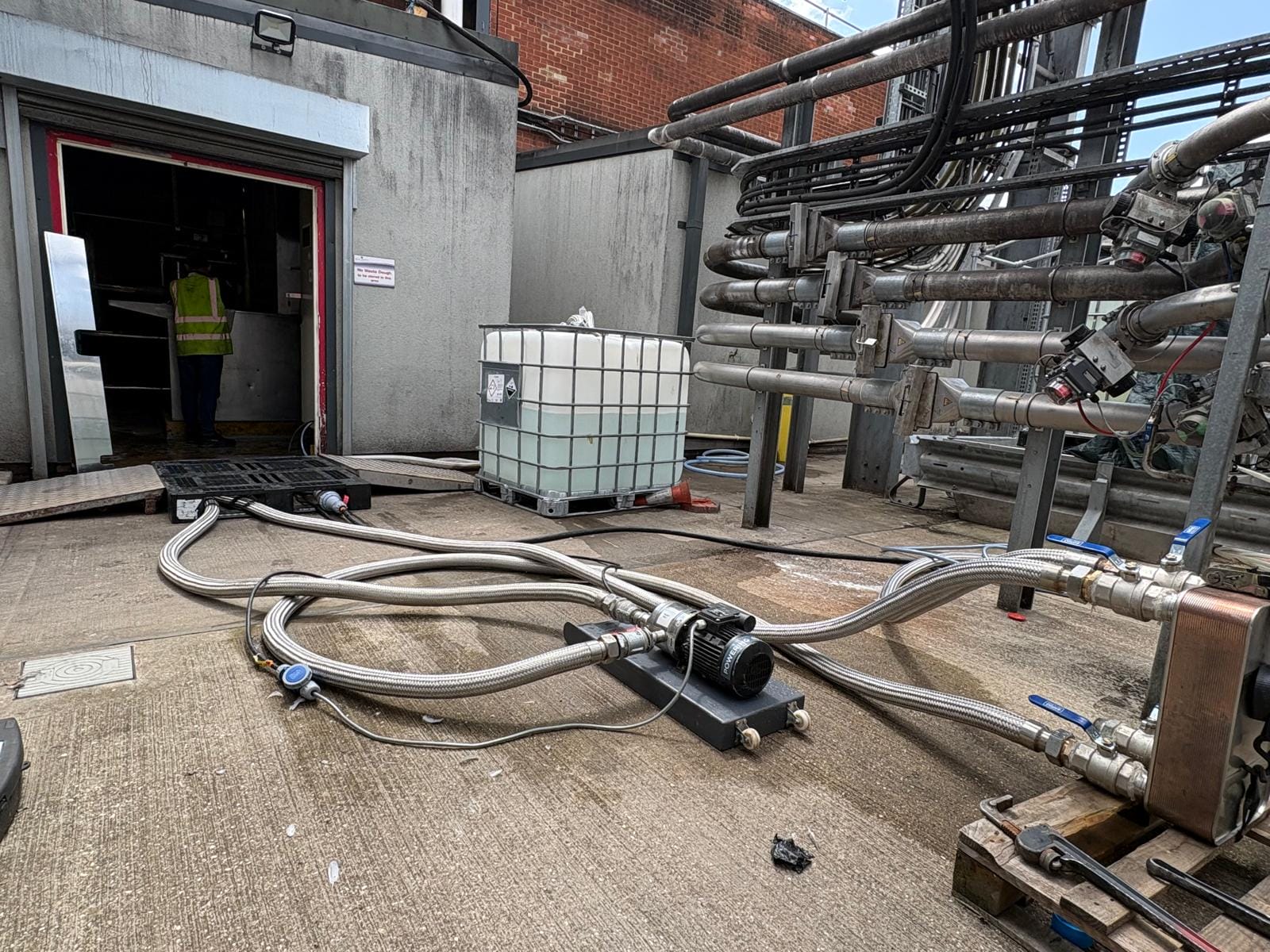
A plate heat exchanger formed the heart of the installation, transferring cooling energy from the glycol circuit into the client’s production process without allowing either liquid to mix. This approach maintained product integrity while enabling the temporary equipment to achieve the required process temperatures.
To ensure consistent flow through the secondary circuit, a booster pump was incorporated into the design. Combined with the buffer tank and stainless steel hoses, the complete package delivered a stable, efficient and fully integrated temporary cooling solution tailored to the site’s manufacturing process.
Once the temporary cooling package had been designed, our engineers coordinated the installation to minimise disruption to the client’s manufacturing operations while ensuring the system met both performance and hygiene requirements.
The temporary 200kW chiller was connected to a primary glycol circuit, providing a stable source of chilled fluid to the plate heat exchanger. Glycol was selected for the primary circuit to help maintain consistent cooling performance while protecting the temporary system during continuous operation at low temperatures.
The plate heat exchanger transferred cooling from the glycol circuit into the client’s process line without allowing either liquid to mix. This indirect cooling method was particularly important within a food manufacturing environment, ensuring the production process remained completely isolated from the temporary cooling circuit.
To achieve the required flow through the client’s existing process, a booster pump was installed on the secondary circuit. This allowed the temporary package to match the site’s operational requirements while maintaining stable cooling across the production line.
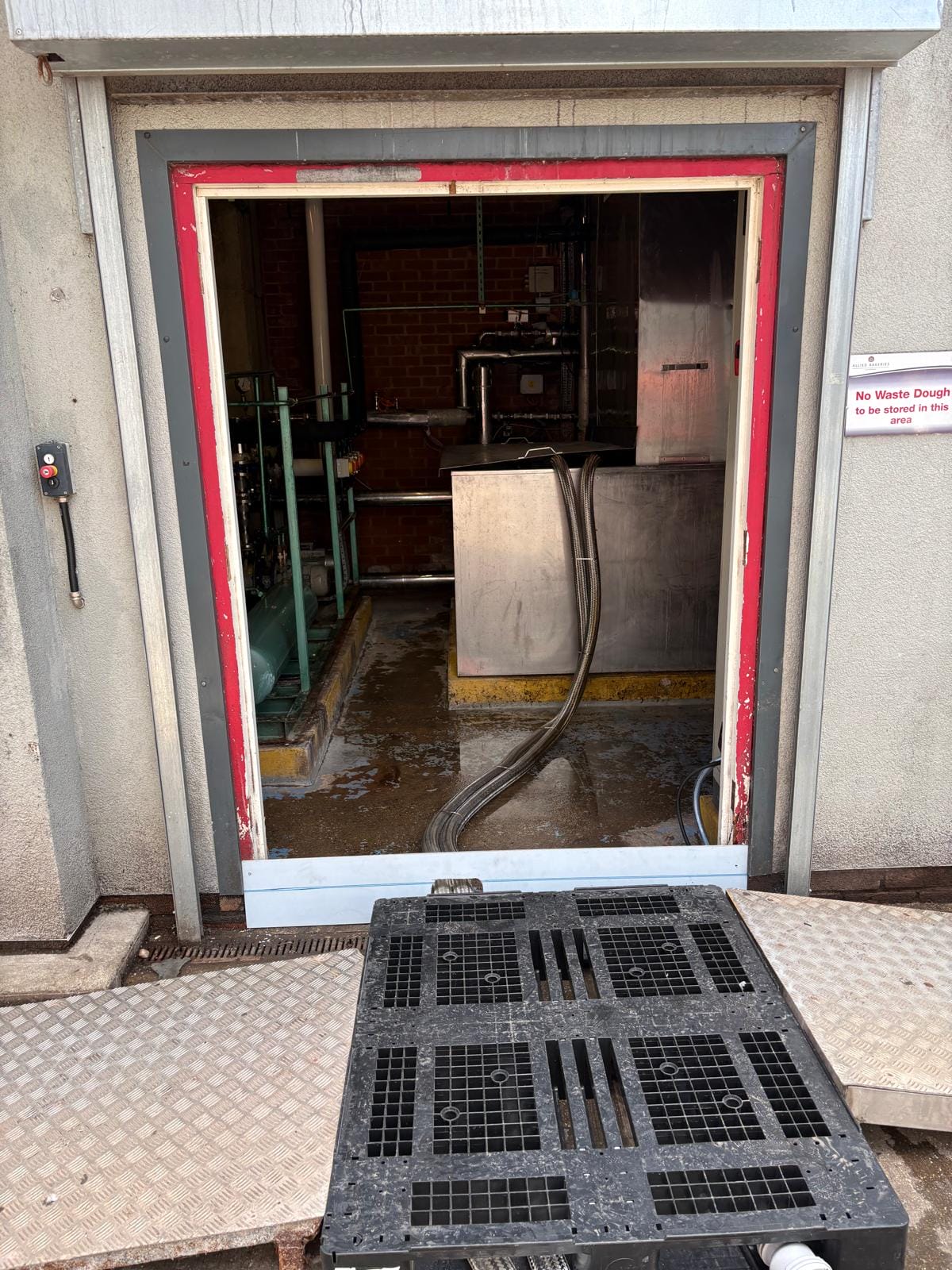
Before the system entered service, the secondary process pipework was cleaned and flushed on site in collaboration with the client’s hygiene team and mechanical engineers. Once all connections had been verified, the installation was commissioned and tested to confirm it was consistently maintaining the required process temperature before being handed over for production use.
The completed installation provided the client with confidence that manufacturing could continue safely while repairs to the permanent cooling plant were undertaken.
The temporary process cooling package comprised:
Each component was selected to provide stable, reliable process cooling while integrating safely with the existing manufacturing system.
Process cooling within food manufacturing demands more than simply producing chilled water.
The failure of the existing chiller package meant the production line could no longer maintain the cooling temperatures required for normal operation. Without intervention, production delays or downtime were a real possibility.
In addition to restoring cooling capacity, the temporary solution needed to satisfy several operational requirements.
The production liquid could not come into contact with the temporary cooling medium, meaning complete separation between both systems was essential. The installation also had to match the client’s existing flow rates while maintaining a consistent process temperature of approximately +1.5°C throughout continuous production.
Finally, because the installation formed part of a food manufacturing process, hygiene remained a key consideration during commissioning.
Rather than connecting the temporary chiller directly into the production process, Ideal Heat Solutions designed a two-circuit cooling arrangement using a plate heat exchanger.
The primary circuit circulated chilled glycol between the temporary chiller and the heat exchanger, while the secondary circuit carried the client’s process liquid independently.
This configuration provided efficient heat transfer while ensuring complete separation between the cooling medium and the manufacturing process.
To maintain the required process flow, a booster pump was installed on the secondary circuit, enabling the temporary package to operate in line with the site’s existing production requirements.
Working alongside the client’s hygiene team and mechanical engineers, the secondary system was thoroughly cleaned and flushed before commissioning to ensure it was suitable for operational use.
The completed installation successfully maintained the required process temperature throughout the six-week hire period.
By delivering stable cooling through the heat exchanger, the temporary package enabled manufacturing to continue without interruption while the client’s permanent cooling equipment was repaired.
The client was particularly pleased with the performance of the equipment and the support provided throughout the hire period, allowing their engineering team to focus on repairing the existing cooling system rather than managing production disruption.
Food manufacturing processes often rely on tightly controlled temperatures to maintain product quality, production efficiency and operational consistency.
When cooling systems fail unexpectedly, even relatively short periods without adequate process cooling can affect manufacturing schedules and increase operational costs.
Temporary chiller hire provides manufacturers with a practical contingency solution, allowing production to continue while permanent equipment is repaired or replaced. By tailoring the temporary package to the site’s process requirements, facilities can maintain stable operating conditions without making permanent alterations to existing infrastructure.
Where hygiene requirements are critical, incorporating equipment such as plate heat exchangers allows cooling to be transferred efficiently while keeping temporary cooling circuits completely separate from production fluids.
Temporary cooling can also support planned maintenance, factory refurbishments, seasonal increases in cooling demand and plant replacement projects, providing manufacturers with flexibility while protecting business continuity.
Every manufacturing process presents different cooling requirements. Factors such as process temperatures, flow rates, hygiene standards and equipment integration all influence the most appropriate temporary solution.
At Ideal Heat Solutions, we work closely with facilities teams, contractors and maintenance engineers to design temporary cooling packages that meet the technical and operational needs of each site.
Our support includes:
Whether supporting planned maintenance or responding to an unexpected equipment failure, our engineers focus on delivering practical temporary cooling solutions that minimise disruption and keep critical operations running.
When the client’s existing process cooling system failed, maintaining production depended on restoring reliable cooling as quickly as possible.
By designing and installing a temporary cooling package centred around a 200kW chiller, plate heat exchanger and booster pump, Ideal Heat Solutions delivered a solution capable of maintaining a consistent +1.5°C process temperature while keeping the temporary cooling circuit completely separate from the production process.
The carefully planned installation enabled manufacturing to continue throughout the six-week hire period, giving the client the time needed to repair their permanent equipment without compromising production.
Whether you’re responding to an emergency breakdown, planning maintenance or looking to improve contingency arrangements, Ideal Heat Solutions can design temporary cooling solutions tailored to your operational requirements.
Whether you’re planning maintenance, responding to an emergency breakdown or looking for temporary heating or cooling, Ideal Heat Solutions can help.
We provide temporary boiler hire, modular boiler hire, temporary chiller hire, air handling unit hire, heater hire, portable air conditioning, evaporative coolers, generators and fuel tanks for commercial, industrial and public sector organisations across the UK.
Our experienced team can recommend the most suitable solution, arrange a site survey where required and support both planned and emergency projects.
📞 0808 231 3886
🌐 www.idealheatsolutions.co.uk/contact-us/
Temporary chiller hire is commonly used when an existing cooling system fails, during planned maintenance or while new equipment is being installed. In food manufacturing, maintaining stable process temperatures is essential for product quality and production continuity. A temporary chiller can provide reliable cooling without requiring permanent alterations, allowing production to continue while permanent systems are repaired or replaced.
A plate heat exchanger allowed cooling to be transferred from the temporary glycol circuit into the client’s production process without mixing the two liquids. This approach helped maintain hygiene standards while delivering the required cooling performance, making it particularly suitable for food manufacturing applications.
A booster pump helps achieve the flow rates required by the client’s existing process. Matching the correct flow is often just as important as achieving the target temperature, ensuring cooling is distributed consistently throughout the system and allowing the temporary installation to integrate effectively with existing equipment.
Yes. The achievable temperature depends on the application, equipment specification and system design. Temporary cooling packages can be configured to maintain low process temperatures where required, often using glycol circuits and heat exchangers to provide stable cooling while protecting the equipment and ensuring reliable performance.
For food manufacturing applications, hygiene is an important part of project planning. Temporary cooling systems can be designed so the cooling medium remains completely separate from the production process. Depending on the application, pipework may also be cleaned and flushed before commissioning in collaboration with the client’s engineering and hygiene teams.
Absolutely. While temporary chillers are frequently used following unexpected breakdowns, they are equally valuable during planned maintenance, plant upgrades, seasonal demand or equipment replacement projects. Having temporary cooling available helps manufacturers avoid unnecessary production interruptions while essential engineering work is completed.