
What Is Remote BMS Monitoring in Chiller Hire?
Temporary chiller hire has evolved significantly in recent years. What was once a standalone piece of equipment requiring regular manual checks is now a fully connected system capable of being monitored and adjusted remotely.
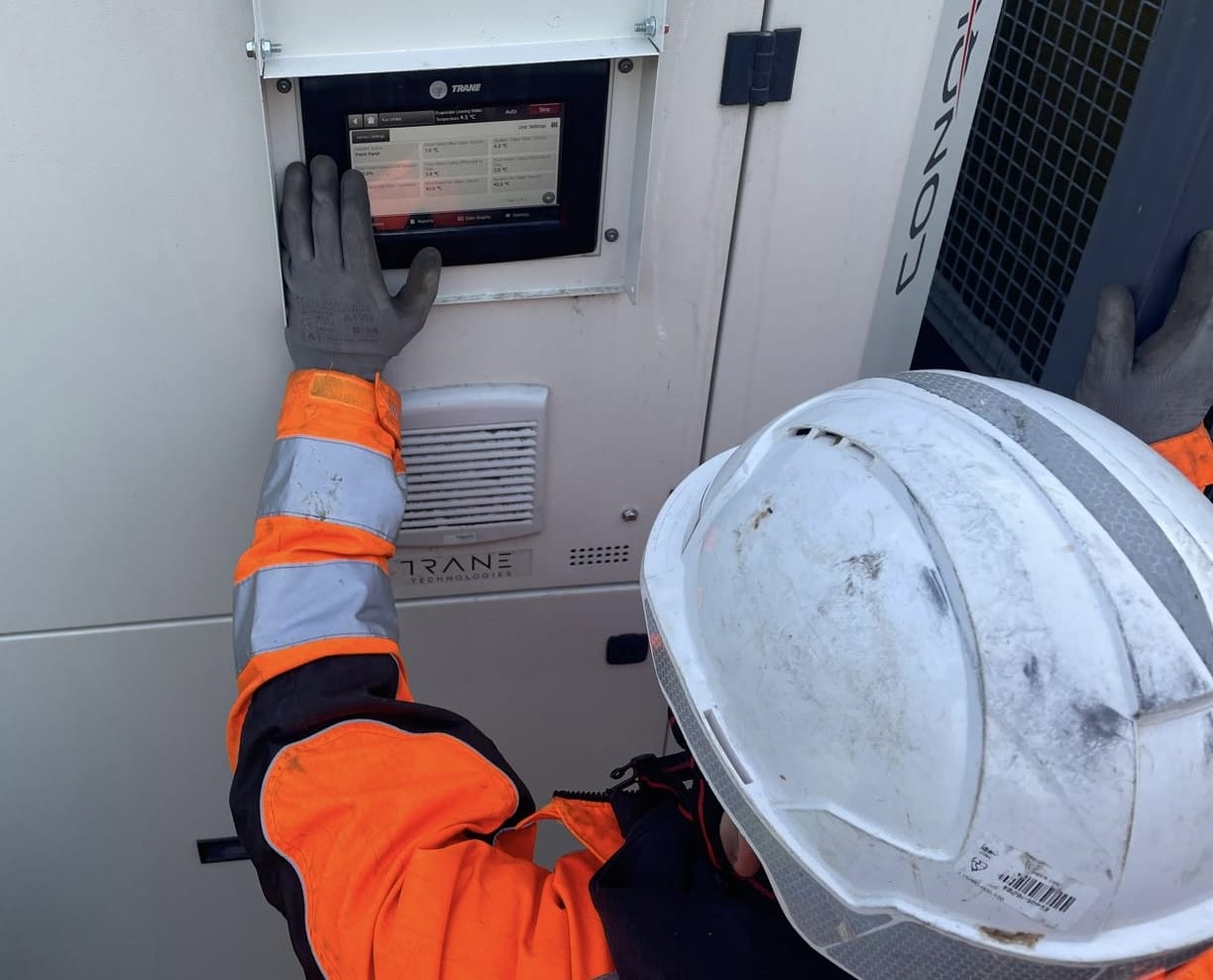
Remote building management system (BMS) monitoring allows engineers to track chiller performance in real time, without needing to be physically present on site. Through platforms such as Trane Connect, data is continuously transmitted from the hire unit, providing a detailed view of how the system is operating at any given moment.
This includes information such as chilled water temperatures, compressor activity, system pressures, and energy consumption. The result is a more responsive, intelligent approach to temporary cooling, where potential issues can be identified and addressed before they affect performance.
How Trane Connect Works
Trane Connect is the remote monitoring platform used across Ideal Heat Solutions’ chiller hire fleet. It provides continuous visibility of key operating parameters, allowing engineers to assess performance and respond to any changes immediately.
When the system detects a deviation from normal operating conditions, such as a temperature fluctuation or a fault code, an alert is generated. Engineers can then review the data remotely and determine the most appropriate course of action.
In many cases, this means resolving the issue without the need for a site visit. Adjustments can be made directly through the system, ensuring that the chiller continues to operate efficiently and reliably.
Reducing Downtime Through Early Detection
One of the most important benefits of remote monitoring is the ability to detect issues as they happen. In a traditional setup, problems may only become apparent once cooling performance has already been affected.
With remote BMS monitoring, faults are identified immediately. This allows engineers to respond at an early stage, often before building temperatures begin to rise or processes are impacted.
In critical environments such as data centres or healthcare facilities, this level of responsiveness is essential. Cooling systems must operate continuously, and any interruption can have serious consequences. Remote monitoring ensures that potential issues are addressed quickly, reducing the risk of disruption.
Remote Adjustments and System Optimisation
Remote monitoring is not limited to fault detection. It also allows engineers to actively optimise system performance throughout the hire period.
Operating parameters can be adjusted to reflect changing conditions within the building. For example, chilled water temperatures can be fine-tuned to match demand, improving efficiency and reducing unnecessary energy use.
Compressor operation can also be optimised, ensuring that the system responds effectively to varying load levels. In addition, certain faults can be reset remotely, avoiding unnecessary call-outs and minimising disruption.
This capability is particularly valuable during the early stages of a hire, when the system is being aligned with the specific requirements of the site. Instead of relying on multiple engineer visits, adjustments can be made continuously and efficiently.
Improving Performance Across Different Applications
The benefits of remote BMS monitoring are consistent across a wide range of applications, although the impact can vary depending on the environment.
In data centres, where cooling is directly linked to IT performance, early detection of temperature changes is critical. Remote monitoring allows issues to be addressed before they affect server operation, helping to maintain uptime and protect infrastructure.
In healthcare settings, where access can be restricted and operational disruption must be minimised, the ability to resolve issues remotely reduces the need for engineer visits. This helps maintain a controlled environment while ensuring systems remain fully operational.
In manufacturing environments, cooling is often part of the production process. Any interruption can lead to delays or product loss. Remote monitoring supports continuous operation by identifying and resolving issues before they escalate.
Even in short-term applications such as events, where access may be limited once the event is underway, remote monitoring provides reassurance that the system is performing as expected without requiring constant on-site supervision.
Energy Efficiency and Ongoing Performance Monitoring
Another important advantage of remote BMS monitoring is the ability to track and improve energy efficiency. By analysing real-time data, engineers can identify when a system is operating outside optimal conditions.
For example, if a chiller is running at higher capacity than required, adjustments can be made to reduce energy consumption while still meeting demand. Similarly, if the system is cycling too frequently, changes can be introduced to improve stability and efficiency.
This ongoing optimisation not only reduces operating costs but also supports sustainability objectives. For businesses with energy reporting requirements, remote monitoring provides a clear record of system performance throughout the hire period.
A More Proactive Approach to Chiller Hire
Remote BMS monitoring changes the way temporary, emergency and planned chiller hire is delivered. Instead of reacting to issues after they occur, systems are actively monitored and managed in real time.
This proactive approach improves reliability, reduces the likelihood of unexpected downtime, and ensures that systems continue to perform as intended throughout the hire period.
For clients, this means greater confidence in the solution. Cooling is not simply provided; it is continuously supported and optimised by a team of engineers with full visibility of system performance.
Conclusion
Remote BMS monitoring has become an essential part of modern temporary chiller hire. By combining real-time data, early fault detection, and remote system optimisation, it transforms hire from a passive service into an actively managed solution.
With platforms such as Trane Connect, businesses can maintain reliable cooling, reduce operational risk, and improve overall system performance without the need for constant on-site intervention.
For any organisation relying on temporary cooling, particularly in critical environments, remote monitoring is not an added benefit. It is a fundamental requirement for ensuring continuity and performance.

Frequently Asked Questions
What is remote BMS monitoring in chiller hire?
Remote BMS monitoring allows engineers to track and manage chiller performance in real time using connected systems such as Trane Connect, without needing to be on site.
How does remote monitoring improve chiller performance?
It enables early detection of faults, real-time performance tracking, and remote adjustments, helping ensure the system operates efficiently and reliably at all times.
Can issues be resolved without an engineer visiting site?
In many cases, yes. Engineers can diagnose faults and adjust system parameters remotely, reducing the need for call-outs and minimising disruption.
What data is monitored on a hire chiller?
Key data includes temperatures, pressures, compressor activity, energy usage, and fault codes, providing a complete view of system performance.
Is remote monitoring important for critical environments?
Yes, it is particularly important in environments such as data centres and hospitals, where continuous cooling is essential and downtime must be avoided.
Does remote monitoring help reduce energy costs?
Yes, by identifying inefficiencies and optimising system performance, remote monitoring can help reduce energy consumption and improve overall efficiency.
Do all hire chillers include remote monitoring?
Not all providers offer this capability, but Ideal Heat Solutions’ hire fleet is equipped with Trane Connect for continuous monitoring and support.
Looking for monitored temporary chiller hire?
Contact Ideal Heat Solutions today or complete our online form to discuss your requirements and arrange a free site survey.