
Data centres and server rooms operate within narrow temperature tolerances. Most modern servers and network equipment are designed to function between 18°C and 27°C, with some high-density deployments requiring even tighter control. When cooling systems fail, or when capacity suddenly falls short of demand, the consequences can escalate from equipment throttling and alarm conditions to thermal shutdown and permanent hardware damage within hours.
For IT and facilities managers responsible for critical infrastructure, a cooling failure is one of the highest-stakes scenarios they will face. Temporary chiller hire provides a rapid, reliable way to restore and maintain cooling while permanent systems are repaired, upgraded, or replaced.
Why Cooling Failures Happen in Data Environments
Cooling systems in data centres and server rooms are under continuous load. Unlike commercial HVAC systems that operate seasonally, computer room air conditioning (CRAC) units, precision air conditioning, and chiller plants for larger facilities run 24 hours a day, 365 days a year. Common causes of failure or capacity shortfall include:
- Compressor failure in CRAC or precision cooling units
- Refrigerant leaks reduce system capacity
- Chiller or cooling tower failures in larger facilities
- Planned maintenance requiring system shutdown
- Unplanned IT hardware growth exceeding existing cooling capacity
- Summer peak temperatures exceeding the design envelope of existing systems
How Temporary Chiller Hire Solves the Problem
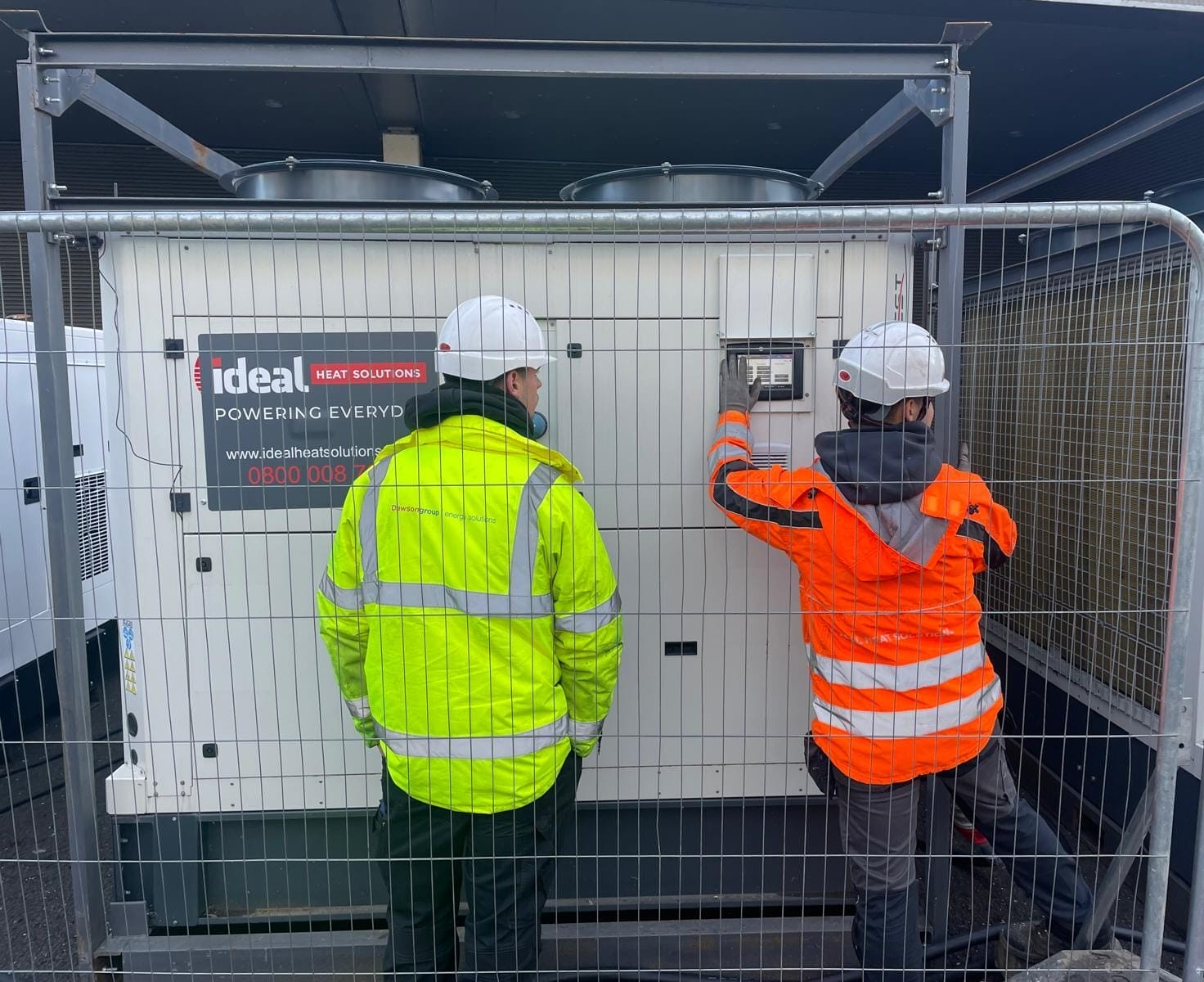
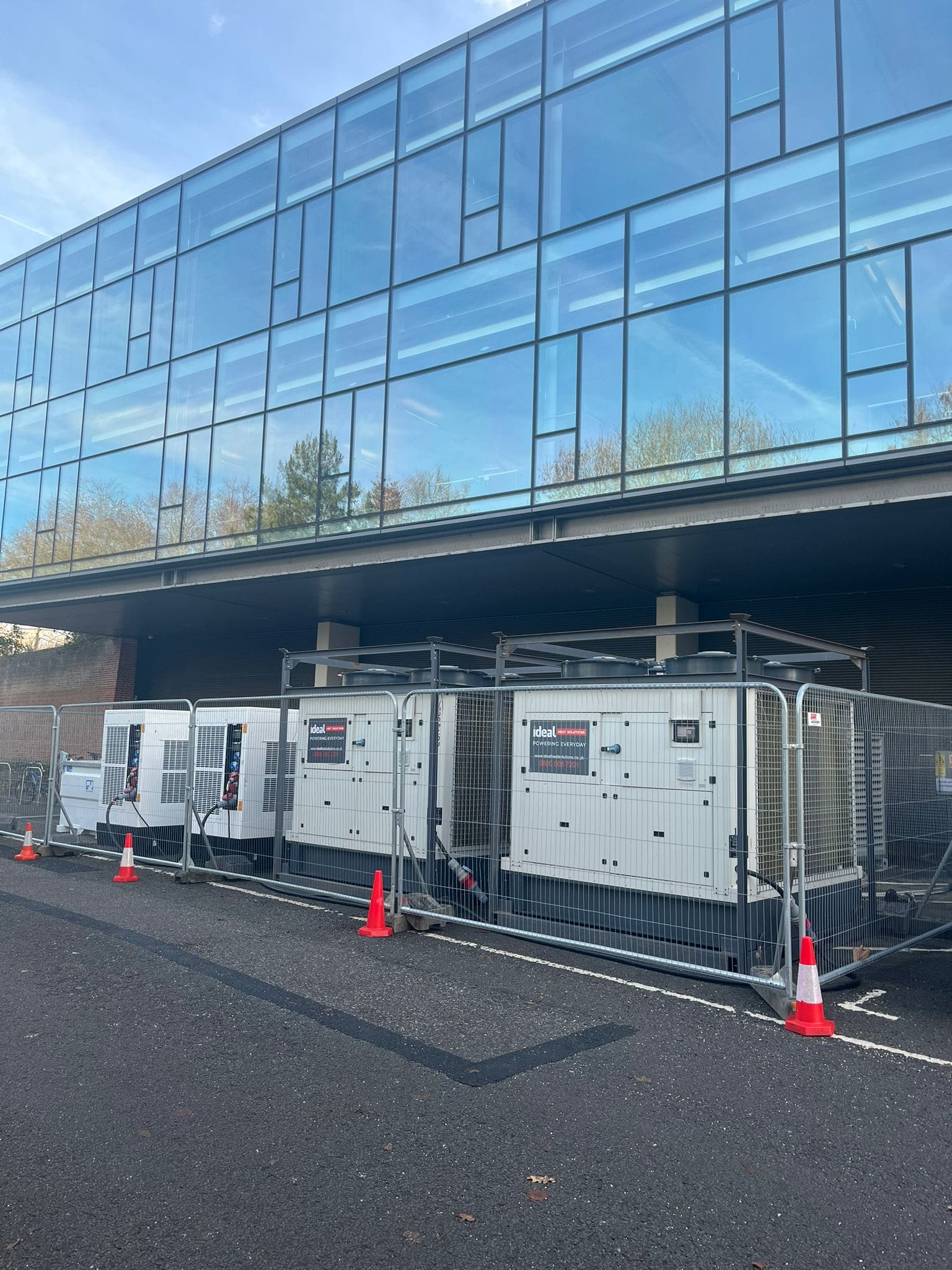
Temporary chillers can be deployed outside the building, typically adjacent to the data centre or in a car park or loading area, and connected to the internal cooling circuit via flexible hose runs. Chilled water is circulated to internal Computer Room Air Handlers (CRAHs) or directly to precision cooling units, maintaining the supply temperature required to keep IT equipment within safe operating ranges.
The key advantages of this approach are speed and scalability. A temporary chiller can be on site and operational within hours of a call, and multiple units can be deployed in parallel if the cooling demand is high or redundancy is required.
What to Consider When Specifying Temporary Chiller Hire for a Data Centre
Cooling Load
The first step is calculating the total heat load in kilowatts. For data centres, this is typically expressed as total IT power load (the amount of electricity the servers and equipment are consuming, which is ultimately all converted to heat). A temporary chiller must be capable of removing at least this load, with margin for ambient temperature variation.
Supply Water Temperature
Most IT cooling systems require chilled water supplied between 7°C and 12°C. Our chiller fleet is capable of delivering water at these temperatures, including in warm ambient conditions. For high-density environments where supply temperatures need to be particularly low, we can specify accordingly.
Pipework and Connection Points
The connection between the temporary chiller and the internal cooling circuit needs to be carefully planned. We assess the location of primary flow and return isolations, the routing for flexible hose, and whether any temporary pipework or fittings are required.
Power Supply
Temporary chillers require a reliable power supply. For larger units, a three-phase supply is needed. If the facility’s existing supply cannot accommodate an additional load, we can also supply generator power as part of the package.
Redundancy
For mission-critical environments, we recommend deploying n+1 chiller capacity, that is, one more unit than the minimum required. This ensures that if one unit encounters a fault, cooling is maintained without interruption.
Remote Monitoring for Data Centre Applications
All Trane chiller units in our fleet are equipped with Trane Connect remote monitoring capability. This allows our engineers to observe performance data, supply and return temperatures, compressor status, and alarm conditions in real time without attending the site. For data centre applications, this level of visibility is particularly valuable, as any deviation from target temperatures can be identified and addressed immediately.
Case for Proactive Temporary Chiller Hire
Not all temporary chiller hire for data centres is reactive. Many IT and facilities teams now use planned temporary chiller hire in the following scenarios:
- Annual maintenance windows when the permanent chiller plant is taken offline
- Summer months, when ambient temperatures reduce permanent chiller efficiency or capacity
- Hardware refresh projects where the IT load temporarily increases beyond the existing cooling capacity
- New builds or fit-outs where permanent cooling systems are not yet commissioned
Proactive hiring allows lead times to be managed comfortably, site surveys to be completed in advance, and connection plans to be agreed upon without the pressure of a live emergency.
Conclusion
Temporary chiller hire is one of the most effective tools available to data centre and server room operators when cooling capacity is compromised. Whether the need is immediate or planned, Ideal Heat Solutions can deploy the right equipment quickly, connect it safely, and monitor it remotely to protect your critical infrastructure.
To discuss your data centre cooling requirements or arrange a site survey, call us on 01622 632 918 or get in touch through our website.