

Cooling systems rarely fail when it’s convenient.
Whether it’s an ageing chiller reaching the end of its service life, an unexpected mechanical fault or planned maintenance taking a cooling system offline, the loss of cooling can quickly affect the day-to-day operation of a commercial building.
During periods of high temperatures, the consequences can escalate quickly. Offices become uncomfortable, manufacturing processes may be affected, data centres face increasing risks and healthcare facilities often need to maintain tightly controlled environmental conditions.
Temporary chiller hire provides a practical solution, helping organisations maintain cooling while permanent systems are repaired, replaced or upgraded.
At Ideal Heat Solutions, we supply temporary chillers and complete engineered cooling packages for commercial, industrial and public sector organisations across the UK, supporting both planned projects and emergency breakdowns.
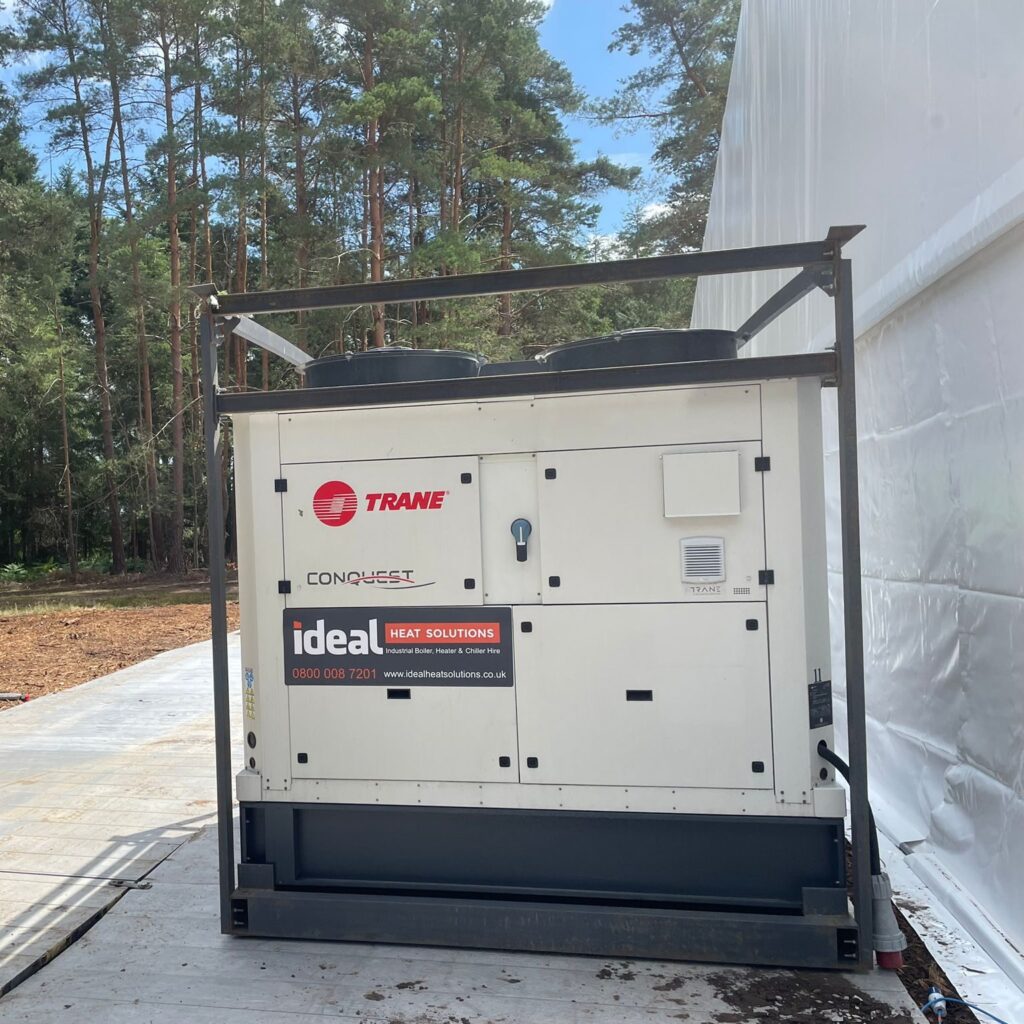
When Is Temporary Chiller Hire Needed?
Many people associate temporary chillers with emergency breakdowns, but they are equally valuable during planned maintenance and refurbishment projects.
Temporary cooling is commonly required when:
- A permanent chiller has unexpectedly failed.
- Existing cooling equipment is being replaced.
- HVAC refurbishment projects require systems to be taken offline.
- Additional cooling capacity is needed during periods of high demand.
- Cooling infrastructure is being upgraded as part of wider decarbonisation programmes.
Regardless of the reason, the objective remains the same: maintaining safe, controlled temperatures while permanent works are completed.
Why Cooling Failures Have Such a Big Impact
Cooling systems support much more than occupant comfort.
In many commercial buildings, they play an essential role in maintaining business continuity, protecting equipment and supporting day-to-day operations.
Without effective cooling, organisations may experience:
- Rising internal temperatures
- Reduced employee productivity
- Overheating equipment
- Manufacturing disruption
- Uncomfortable environments for customers and visitors
- Increased pressure on IT infrastructure
- Operational downtime
The impact will vary depending on how the building is used, but prolonged cooling failures can become increasingly disruptive if temporary cooling arrangements are not available.
For this reason, many facilities managers now include temporary cooling within their wider contingency planning strategy.
Planned Cooling Cover vs Emergency Chiller Hire
Although the equipment may be similar, planned and emergency cooling projects often require different approaches.
Planned Temporary Cooling
Planned projects allow temporary chillers to be installed before permanent systems are taken offline.
This approach is commonly used during:
- Chiller replacements
- HVAC refurbishments
- Plant room upgrades
- Building improvement programmes
- Seasonal maintenance
Installing temporary cooling in advance helps maintain comfortable conditions while reducing disruption to occupants.
Emergency Cooling
Unexpected failures require a different response.
Mechanical faults, electrical failures and ageing equipment can all result in an immediate loss of cooling.
Temporary chiller hire allows cooling capacity to be restored while permanent repairs are arranged, helping buildings continue operating until the existing system is returned to service.
Choosing the Right Temporary Chiller
No two buildings have identical cooling requirements.
Before recommending equipment, engineers typically assess:
- Cooling load
- Existing chilled water infrastructure
- Available electrical supplies
- Pipework connections
- Equipment access
- Available external space
- Building occupancy
- Duration of hire
A detailed site survey helps determine whether a cooling-only chiller, heat pump chiller or complete temporary cooling package is the most appropriate solution.
In many cases, additional equipment such as air handling units, pumps, hoses and buffer tanks may also be required to ensure the system operates safely and efficiently.
Installation Considerations
Installing a temporary chiller involves more than delivering equipment to site.
Engineers must also consider:
- Equipment positioning
- Access restrictions
- Pipework routes
- Electrical connections
- Noise considerations
- Health and safety requirements
- Building Management System integration where appropriate
By addressing these factors before installation begins, temporary cooling can often be delivered with minimal disruption to building operations.
Why Planning Ahead Makes a Difference
The best time to think about temporary cooling isn’t after a chiller has failed.
Reviewing cooling infrastructure before peak summer temperatures or major refurbishment projects allows facilities managers to understand their options and develop an effective contingency plan.
Planning ahead can help:
- Reduce disruption during maintenance.
- Improve coordination with contractors.
- Confirm installation requirements.
- Identify the most suitable temporary cooling solution.
- Minimise delays if emergency cooling becomes necessary.
Even if temporary equipment is never required, having a contingency plan provides reassurance that business continuity can be maintained if permanent cooling systems fail.
Why Choose Ideal Heat Solutions for Temporary Chiller Hire?
Every cooling project has different technical requirements. Factors such as cooling demand, site access, existing infrastructure and programme timescales all influence the most appropriate solution.
At Ideal Heat Solutions, we work with facilities managers, contractors and estates teams to design engineered temporary cooling solutions that are tailored to each project.
Our service includes:
- Site surveys and technical advice
- Temporary chiller hire
- Cooling-only chillers
- Heat pump chillers
- Air handling units
- Pumps, hoses and ancillary equipment
- Delivery, installation and commissioning
- Planned and emergency cooling support
- Nationwide engineering support
Whether you’re responding to an unexpected cooling failure or planning a major refurbishment, our experienced team can recommend a temporary cooling solution that keeps your building operational.
Conclusion
Unexpected cooling failures can have a significant impact on commercial buildings, particularly during warmer weather or in facilities where maintaining controlled temperatures is essential.
Temporary chiller hire provides a practical solution for both planned and emergency situations, helping organisations maintain business continuity while permanent cooling systems are repaired, replaced or upgraded.
By combining early planning with an engineered temporary cooling solution, facilities managers can reduce disruption, protect critical operations and keep their buildings running when cooling matters most.
Contact Ideal Heat Solutions
Whether you’re planning maintenance, responding to an unexpected chiller breakdown or preparing for periods of increased cooling demand, Ideal Heat Solutions can provide a temporary cooling solution tailored to your project.
We supply:
- Temporary Chiller Hire
- Cooling-Only Chiller Hire
- Heat Pump Chiller Hire
- Air Handling Unit Hire
- Temporary Boiler Hire
- Generator Hire
- Fuel Tank Hire
Our experienced team can assess your cooling requirements, recommend the most suitable equipment and provide a fully engineered temporary cooling package.
📞 0808 258 6781
🌐 www.idealheatsolutions.co.uk
Frequently Asked Questions
When should I hire a temporary chiller?
Temporary chiller hire is suitable whenever your permanent cooling system cannot meet operational requirements. This may include emergency breakdowns, planned maintenance, chiller replacement projects, refurbishment works or periods of unusually high cooling demand. Installing temporary cooling helps maintain business continuity while permanent systems are repaired or upgraded.
What types of buildings use temporary chillers?
Temporary chillers are commonly used in hospitals, commercial offices, hotels, manufacturing facilities, data centres, universities, retail premises and other buildings with centralised cooling systems. Any organisation that relies on maintaining stable internal temperatures can benefit from temporary cooling during planned or unexpected outages.
How is a temporary chiller connected?
The installation method depends on the building’s existing infrastructure. Temporary chillers are often connected to the building’s chilled water system using temporary pipework, pumps and ancillary equipment. A site survey identifies the most suitable connection points and confirms the installation requirements before equipment is delivered.
How quickly can temporary cooling be installed?
Installation times vary depending on the project, equipment availability and site conditions. Smaller systems can often be deployed more quickly, while larger installations may require additional planning, pipework and commissioning. Following an initial assessment, an appropriate deployment programme can be agreed based on the site’s operational requirements.
Can temporary chillers work alongside existing HVAC systems?
Yes. In many cases, temporary chillers supplement rather than replace the permanent cooling system. This approach is commonly used during phased refurbishment works or when additional cooling capacity is required during periods of increased demand. The exact configuration depends on the existing HVAC infrastructure.
Why is contingency planning important for cooling systems?
Cooling failures often occur when systems are under the greatest strain, particularly during warmer weather. Developing a contingency plan allows facilities managers to understand their options, identify suitable temporary equipment and prepare for unexpected breakdowns before they affect business operations. This proactive approach improves resilience and helps minimise disruption.