

What Happens If Your Heating System Fails This Winter?
A heating breakdown is inconvenient at any time of year.
During winter, it can quickly become an operational emergency.
Commercial and industrial heating systems often operate under their greatest demand during the coldest months. If critical plant fails, organisations may suddenly face the loss of space heating, domestic hot water or temperature control.
The question shouldn’t simply be “What will we do if the boiler fails?”
It should be:
“Do we already know exactly what we’ll do?”
That is the purpose of HVAC contingency planning.
What Is an HVAC Contingency Plan?
An HVAC contingency plan establishes how temporary heating or cooling will be introduced if critical permanent equipment becomes unavailable.
Rather than beginning the specification process after a breakdown has already occurred, key information is established beforehand.
For winter heating, this may include:
- Required temporary boiler or heater capacity
- Temporary plant positioning
- Site access requirements
- Connection points
- Hose and pipework routes
- Fuel requirements
- Electrical requirements
- Required pumps and heat exchangers
- Emergency contacts
- Delivery and installation considerations
This gives facilities teams a clear starting point should an emergency occur.
Why Is Contingency Planning Particularly Important During Winter?
Heating demand rises significantly as outdoor temperatures fall.
Equipment that has operated adequately during warmer periods may experience considerably greater demand during sustained cold weather.
At the same time, the consequences of a failure become more serious.
Depending on the building, loss of heating or hot water can affect employees, residents, patients, students, guests, production processes or temperature-sensitive equipment.
Having a temporary heating strategy already established can therefore form an important part of wider business continuity planning.
Identify Your Critical HVAC Equipment
The first stage of contingency planning is identifying the equipment that presents the greatest operational risk.
This could include:
- Main boilers
- Domestic hot water systems
- Heating pumps
- Heat exchangers
- Critical heating circuits
- Process heating equipment
Facilities teams should consider what would happen if each critical component became unavailable.
Would the entire building lose heating? Would domestic hot water stop? Could production continue? How long could the site realistically operate without the system?
Understanding these consequences helps determine where contingency planning should be prioritised.
Know the Temporary Capacity You Would Need
One of the most useful pieces of information to establish before an emergency is the required temporary heating capacity.
During a breakdown, there may be pressure to source equipment immediately. However, selecting temporary plant without properly understanding the site’s requirements can result in unnecessary complications.
Knowing the approximate capacity required means suitable temporary boilers or heaters can be identified more quickly.
The temporary solution does not necessarily need to replicate the permanent system exactly. The requirement should instead be assessed according to the critical heating or hot water load that must be maintained.
Identify Temporary Boiler Connection Points
Finding a temporary boiler is only part of the solution.
It must also be connected to the building.
A contingency survey can identify suitable connection points before an emergency occurs and determine how temporary hoses will reach them.
Where appropriate, organisations may also choose to incorporate temporary boiler connection points into their permanent infrastructure.
This can significantly simplify future temporary installations by providing accessible connections specifically intended for temporary plant.
Plan Where Temporary Equipment Will Be Positioned
Temporary HVAC equipment requires suitable space.
A contingency plan should identify where boilers, heaters and associated equipment could safely be positioned.
Access should also be considered.
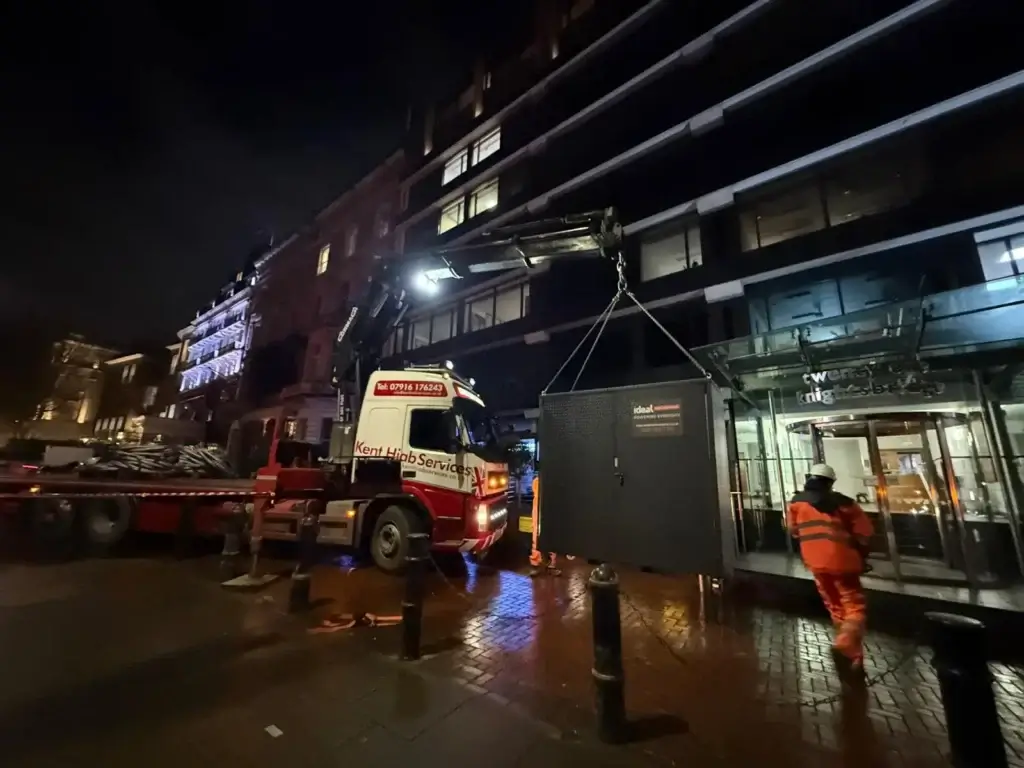
Can delivery vehicles reach the proposed location? Is HIAB access available? Are there narrow entrances, height restrictions or other obstacles?
Sites with challenging access may require alternative equipment such as slimline or modular boilers rather than conventional packaged plant.
Identifying this before an emergency prevents valuable time being lost discovering that the originally proposed equipment cannot reach the installation location.
Consider Fuel, Power and Ancillaries
A temporary heating installation usually requires more than the primary boiler or heater.
Depending on the system, additional requirements may include:
- Fuel tanks
- Pumps
- Plate heat exchangers
- Temporary hoses
- Electrical cabling
- Distribution equipment
- Ducting
- Controls
- Water treatment or filtration equipment
A contingency plan should consider the complete temporary system rather than simply the main heating unit.
Temporary Boilers for Emergency Heating
Where permanent boiler plant fails, temporary boilers can maintain heating and domestic hot water while repairs or replacement works take place.
Different sites may require different solutions.
Packaged boilers can provide substantial temporary capacity where sufficient space and access are available.
Slimline and modular boiler systems can provide alternatives for sites where access or positioning is more restricted.
Electric boilers may also be suitable for certain applications where the required electrical infrastructure is available.
Having these options considered beforehand allows the contingency solution to reflect the actual constraints of the site.
Temporary Heaters as Part of a Contingency Plan
Not every heating emergency requires connection into the existing wet heating system.
Temporary electric or IDF heaters may provide another option for maintaining temperatures in specific areas.
For example, temporary warm-air heating may be useful for warehouses, workshops, industrial buildings and other large spaces.
This means an effective contingency plan should consider the required outcome rather than automatically assuming the permanent system must be replicated.
Don’t Wait Until the Breakdown
The biggest advantage of contingency planning is that decisions can be made without the pressure of an active emergency.
Instead of trying to establish boiler capacity, locate connection points, determine hose routes and organise temporary plant after heating has already failed, much of this work can be completed beforehand.
The resulting plan provides facilities teams with a clear framework for responding if critical HVAC equipment becomes unavailable.
Read our Contingency Planning Service brochure.

Review Your Contingency Plan Regularly
A contingency plan should not simply be produced and forgotten.
Buildings change.
Heating equipment is replaced, plant rooms are refurbished, site access changes and operational requirements evolve.
Plans should therefore be reviewed periodically to ensure equipment capacities, connection points, access arrangements and contact information remain accurate.
Winter preparation provides a natural opportunity to review this information before colder weather arrives.
Why Choose Ideal Heat Solutions for HVAC Contingency Planning?
Ideal Heat Solutions supports commercial and industrial organisations with planned and emergency temporary HVAC solutions across the UK.
Our fleet includes packaged, slimline, modular and electric boilers alongside electric and IDF heaters, chillers, AHUs and the ancillaries required to build complete temporary systems.
By assessing requirements before an emergency occurs, we can help organisations understand the temporary equipment and installation arrangements that could be required if critical HVAC plant fails.
And if the contingency plan ever needs to be activated, the essential groundwork has already been completed.
Frequently Asked Questions
What is an HVAC contingency plan?
An HVAC contingency plan documents how temporary heating or cooling could be introduced if critical permanent HVAC equipment fails or becomes unavailable.
Why should I have a boiler contingency plan?
A boiler contingency plan can reduce the amount of specification and logistical planning required following an unexpected failure, particularly during winter when heating and hot water may be critical.
What should a heating contingency plan include?
It should consider required capacity, temporary equipment, connection points, access, positioning, hose routes, electrical or fuel requirements and required ancillaries.
Can temporary boiler connections be installed in advance?
Yes. Where appropriate, dedicated temporary connection points can be incorporated into a building’s heating infrastructure to make future temporary boiler installations easier.
What if my site has restricted access?
Alternative equipment such as slimline or modular boilers may be suitable where conventional packaged plant cannot easily reach the proposed installation area.
Should contingency plans be reviewed?
Yes. Plans should be reviewed periodically and following significant changes to HVAC plant, site access or building requirements.
Is contingency planning only for boilers?
No. Contingency planning can cover boilers, chillers, heaters and other critical HVAC equipment depending on the requirements of the building.
Prepare Before Winter Puts Your HVAC System to the Test
Nobody can predict exactly when HVAC equipment will fail.
What facilities teams can control is how prepared they are to respond.
Establishing capacity, access, connection points and temporary equipment requirements in advance can turn an unexpected winter breakdown from an unknown problem into a planned response.
Don’t wait for your heating system to fail before deciding what happens next. Speak to Ideal Heat Solutions about HVAC contingency planning and temporary heating solutions for your site.