

How prepared is your site for a boiler failure?
For commercial and industrial buildings, a boiler breakdown isn’t just inconvenient — it can cause lost revenue, safety risks, compliance issues and operational shutdowns. Yet many organisations only think about contingency planning once a failure has already occurred.
This guide explains how commercial and industrial boiler contingency planning works, why it matters, and how businesses can protect themselves using a structured approach — including temporary boiler solutions, remote monitoring, and formal contingency plans such as Ideal Heat Solutions’ Protect and Protect Plus services.
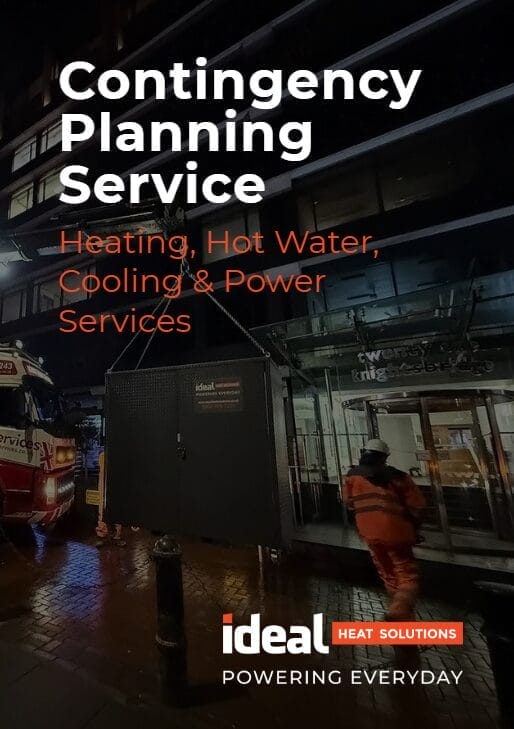
What Happens If You Don’t Have a Boiler Contingency Plan?
Most boiler failures don’t happen at convenient times. They often occur under peak demand, during cold weather, or when systems are already under strain.
Without a contingency plan in place, businesses may face:
- Immediate loss of heating and hot water
- Disruption to staff, customers or production
- Health and safety concerns, particularly in occupied or regulated environments
- Unplanned shutdowns that cannot be recovered
- Escalating costs caused by rushed decisions
In commercial buildings such as offices, hotels and public facilities, a boiler failure can force closures or reduced occupancy. In industrial environments — including manufacturing, logistics and processing sites — downtime can interrupt production lines, damage equipment and compromise process stability.
In critical environments like healthcare, care homes and food production, loss of heat or hot water can quickly become a compliance issue, not just an operational one.
Why Boiler Contingency Planning Is a Commercial and Industrial Responsibility
Boiler contingency planning isn’t only relevant to one sector. Any organisation that relies on heating or hot water as part of its operations should have a defined plan.
This includes:
- Commercial offices and public buildings
- Hospitals, healthcare facilities and care environments
- Schools, colleges and universities
- Hotels, leisure centres and hospitality venues
- Manufacturing and industrial facilities
- Warehouses, logistics hubs and distribution centres
For industrial sites in particular, boilers are often tied directly to processes, space conditioning or production requirements. A failure can therefore affect output, safety and contractual obligations — not just comfort.
The Real Cost of Boiler Failure (Beyond Repairs)
Many organisations focus on the repair cost of a failed boiler, but this is often the smallest part of the problem.
The wider impact may include lost revenue, contractual penalties, reputational damage, staff downtime, emergency call-outs, temporary closures and compliance risks. These costs are rarely budgeted for and often exceed the price of preventative planning.
A well-structured contingency plan is therefore not an expense — it’s a form of risk management.
Planned Preventative Maintenance Isn’t a Contingency Plan
Planned Preventative Maintenance (PPM) is essential, but it does not replace contingency planning.
PPM helps reduce the likelihood of failure by identifying issues early, improving efficiency and extending equipment life. However, even well-maintained systems can fail due to age, external factors, component faults or unexpected demand.
A contingency plan answers a different question:
What happens if the boiler fails anyway?
Effective contingency planning assumes failure is possible and prepares the organisation to respond calmly and efficiently when it happens.
Using System Data to Inform Contingency Planning
Modern commercial and industrial boiler systems generate valuable performance data. Reviewing historical trends can highlight weaknesses before they become failures.
Patterns such as fluctuating temperatures, increased cycling, rising fuel usage or pressure instability can indicate stress on the system. This data should inform both maintenance schedules and contingency planning decisions.
Ideal Heat Solutions’ temporary and emergency boiler systems are supplied with Trend BMS remote monitoring, allowing performance to be observed continuously. This not only supports faster response when issues arise but also contributes to better long-term planning.

Water Quality: An Often-Overlooked Risk Factor
Poor water quality is one of the most common causes of boiler failure in commercial and industrial systems.
Scaling, sludge, corrosion and contamination can reduce efficiency, restrict flow and cause overheating. Over time, this increases the risk of breakdown and shortens equipment lifespan.
Regular water treatment, monitoring and system cleaning are essential components of a wider contingency strategy. They help reduce failure risk and ensure that, if a temporary boiler is required, it can be integrated safely and efficiently.
Temporary and Emergency Boiler Hire as Part of a Contingency Plan
A robust boiler contingency plan should include a clear strategy for temporary or emergency boiler hire.
Rather than searching for suppliers during a crisis, organisations should know in advance:
- What capacity may be required
- Where temporary equipment can be positioned
- How it will connect to existing systems
- Who is authorised to initiate deployment
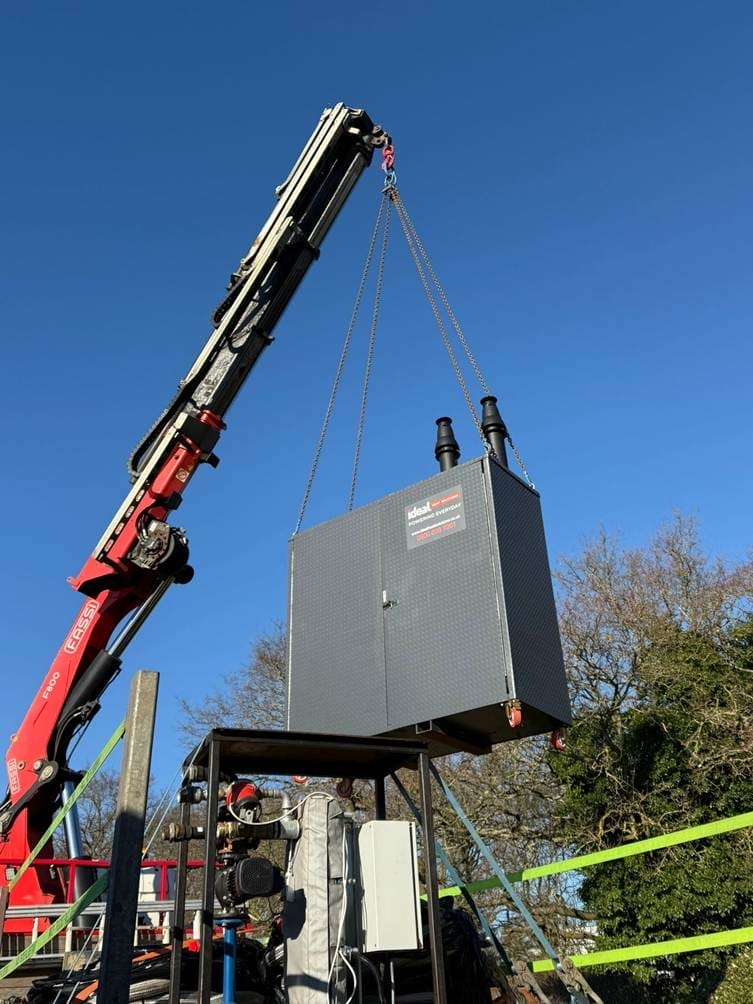
Ideal Heat Solutions supports commercial and industrial clients with temporary, planned and emergency boiler hire, ranging from small electric units to large packaged plant rooms. These systems can be mobilised to maintain heating and hot water while permanent plant is repaired, upgraded or replaced.
Protect and Protect Plus: Structured Contingency Planning
Ideal Heat Solutions offers two structured contingency planning services designed specifically for commercial and industrial clients: Protect and Protect Plus.
The Protect plan provides a defined framework for boiler contingency, including system review, planning support and priority response. It ensures that key information is documented and that decision-makers know exactly what steps to take if a failure occurs.
Protect Plus builds on this by offering enhanced support, including deeper system understanding, faster mobilisation and additional reassurance for high-risk or mission-critical environments.
Both plans are designed to reduce downtime, remove uncertainty and give organisations confidence that heating continuity is protected.
READ MORE HERE: Contingency Planning
When Should You Put a Contingency Plan in Place?
The best time to plan for a boiler failure is before one happens.
Spring and summer are often ideal periods to review contingency arrangements, as systems are under less demand and planning can be done without pressure. Waiting until autumn or winter reduces options and increases risk.
Organisations should also revisit their contingency plans following refurbishments, changes in occupancy, system upgrades or changes in operational use.
Commercial and Industrial Compliance Considerations
Boiler failures can raise compliance concerns, particularly in regulated environments. Health and safety requirements, environmental standards and industry-specific regulations may all be impacted by loss of heating or hot water.
Working with a specialist provider ensures that temporary solutions are compliant, safely installed and appropriate for the application. Ideal Heat Solutions’ engineers are experienced in working within sensitive, regulated and high-risk environments across the UK.
Conclusion: Prevention, Planning and Peace of Mind
Boiler contingency planning is not about expecting failure — it’s about being prepared for it.
For commercial and industrial organisations, having a clear plan reduces risk, protects people, safeguards operations and avoids unnecessary cost. Whether through preventative maintenance, data analysis, water treatment or structured contingency services like Protect and Protect Plus, planning ahead puts control back in your hands.
Temporary and emergency boiler hire should never be a last-minute decision. With the right partner and the right plan, continuity can be maintained even when permanent plant is offline.
VIEW OUR DIGITAL CONTINGENCY PLANNING SERVICE BROCHURE
FAQs
What is a boiler contingency plan?
A boiler contingency plan outlines how an organisation will respond if its heating or hot water system fails, including temporary solutions and responsibilities.
Are boiler contingency plans only for commercial buildings?
No — they are equally important for industrial sites where heating or hot water supports production, safety or processes.
What is the difference between Protect and Protect Plus?
Protect provides structured contingency planning support, while Protect Plus offers enhanced coverage for higher-risk or mission-critical environments.
Can a temporary boiler really replace a permanent system?
Yes — temporary boilers are designed to maintain heating and hot water while permanent systems are repaired or replaced.
When should contingency planning be reviewed?
Ideally annually, and whenever there are changes to the building, system or operational use.
Do temporary boilers meet safety and compliance standards?
Yes — when supplied and installed by a specialist provider like Ideal Heat Solutions.
Call our team today or complete our quick online form for a free, no-obligation discussion about boiler contingency planning for your commercial or industrial site.
📞 CALL US: 0808 3014 183
QUICK FORM FILL: Contact Us – Ideal Heat Solutions
BROWSE OUR COMMERCIAL BOILER HIRE RANGE
BROWSE OUR INDUSTRIAL BOILER HIRE RANGE
Explore our latest project case studies
